Category Archives: Cork Flooring

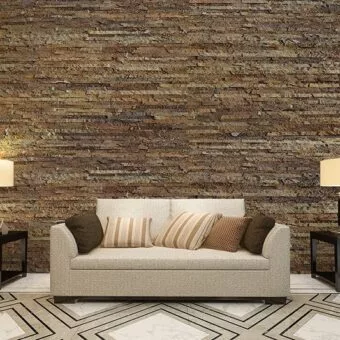
Cork Wall Panels: Acoustic Performance Meets Design

Compare cork wall and ceiling products, from flat tiles to sculpted 3D panels. Choose by texture, dimensions, installation method and the acoustic requirements of your room.

Two Categories of Cork Wall Products

3D Acoustic Cork Wall Panels

Our 3D CompMold cork panels are three-dimensional shapes made from compressed cork. They create patterns like brick, ledge stone, wave, and slat designs. At approximately 30mm thick, they provide meaningful sound absorption that flat materials cannot match. These are popular in home theaters, music rooms, offices, and restaurants where echo control matters.

Flat Cork Wall and Ceiling Tiles

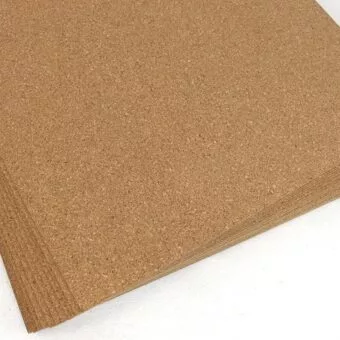
Our textured cork wall tiles provide a natural cork surface in a thinner profile. They work as accent walls, ceiling treatments, or bulletin-board-style functional surfaces. Cork is naturally self-healing from pin holes, making it practical for offices and studios.

Why Cork for Walls?

Sound Absorption

Hard surfaces like drywall, glass, and tile reflect sound waves, creating echo and amplifying noise. Cork absorbs sound energy rather than reflecting it. In practical terms, a room with cork wall panels will feel noticeably quieter. This is particularly valuable in open-concept homes, home offices, and any space where you take video calls.

Thermal Insulation

Cork wall panels add a layer of thermal insulation to exterior walls. While they are not a replacement for proper wall insulation, they do reduce the cold-wall effect where interior surfaces near exterior walls feel cold to the touch in winter.

Natural Aesthetic

Cork has a warm, organic texture that is difficult to replicate with synthetic materials. The 3D panels create shadow and depth that changes throughout the day as lighting shifts. Each panel has natural variation in colour and pattern, so no two installations look identical.

Installation

Cork wall panels install with adhesive directly to drywall, plywood, or concrete. The process is straightforward:

  1. Ensure the wall surface is clean, dry, and flat
  2. Apply cork adhesive to the wall and/or panel back
  3. Press the panel into position
  4. Allow adhesive to cure per manufacturer instructions

Pricing

Wall tile prices range from $4.49 to $24.69 per square foot depending on the design and thickness. 3D acoustic panels with MDF backing are at the higher end of the range due to the three-dimensional manufacturing process. Because wall panels are decorative and functional rather than full-room coverage, most projects require fewer units than a flooring project.

Order samples to see the texture and depth in person before committing to a full wall installation.
Cork Flooring in Kitchens and Bathrooms: What Homeowners Should Know

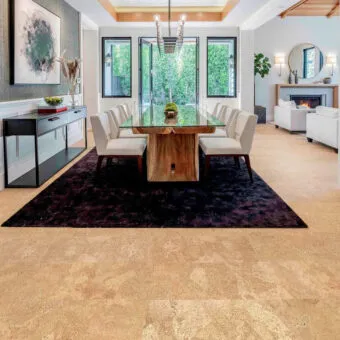
One of the most common questions we hear at iCorkFloor is whether cork flooring can go in kitchens and bathrooms. The short answer is yes, but the installation method matters. Here is what you need to know based on our actual product specs and what we have learned from customers across the United States.

Why Cork Works in Wet Areas

Cork is naturally water-resistant at the cellular level. Each cubic centimeter of cork contains approximately 40 million sealed air cells. These cells do not absorb water. This is the same reason cork has been used to seal wine bottles for centuries. However, the way cork flooring planks are assembled introduces joints and edges where water could potentially reach the subfloor, which is why installation method matters.

Kitchens: Floating or Glue-Down Both Work

For kitchens, both floating and glue-down cork perform well. Kitchen moisture is typically from spills that get wiped up quickly, not standing water.

  • Floating cork – The Uniclic click-lock joints resist casual water exposure. Wipe up spills promptly and the floor handles normal kitchen use without issues.
  • Glue-down cork – Cork tiles bonded directly to the subfloor eliminate any gap where water could seep underneath. This is the more cautious choice if you are concerned about water near the dishwasher or sink.

Beyond water resistance, cork provides a meaningful comfort advantage in kitchens. If you spend extended time cooking and standing, the natural cushion of cork reduces fatigue compared to tile or hardwood.

Bathrooms: Glue-Down Is the Safer Choice

Bathrooms have more sustained moisture exposure than kitchens. Shower steam, bath splashes, and condensation are daily occurrences. For bathrooms, we recommend glue-down cork tiles. The full-spread adhesive creates a seal between the cork and the subfloor, preventing moisture from getting trapped underneath.

Our Swiss-made cork floating floors feature water-tight click joints with enhanced sealing, making them another option for bathrooms with lower moisture exposure (powder rooms, half-baths). These carry a “Very Good” water rating in our product specifications.

What About the Finish?

All Forna cork floors come pre-finished with a water-based polyurethane coating. This factory-applied finish protects the cork surface from water, stains, and wear. For kitchens and bathrooms, we recommend applying an additional coat of polyurethane after installation to seal the joints between planks or tiles. This creates a continuous protective barrier across the entire floor surface.

Maintenance in Wet Areas

Cork in kitchens and bathrooms requires the same basic care as anywhere else:

  • Wipe up standing water promptly
  • Use mats at the sink and bath exit
  • Damp mop regularly (avoid soaking)
  • Recoat with polyurethane every few years depending on traffic

What We Recommend

For kitchens: either floating or glue-down cork works. Choose based on whether you want the easier DIY installation (floating) or the extra moisture security (glue-down).

For full bathrooms: go with glue-down cork tiles for the best moisture protection.

For powder rooms and half-baths: floating cork is fine since moisture exposure is minimal.

Order free samples to test how cork feels underfoot compared to tile. Many customers tell us the comfort difference is what convinced them.

Cork Flooring Costs: A Transparent Price Breakdown

Update, September 28, 2026: the prices in this April 2026 article are out of date. See the current cork flooring cost guide for today’s prices per square foot, supplies and shipping.

One of the reasons we built iCorkFloor.com with per-square-foot pricing is so you can compare costs clearly. Here is a transparent breakdown of what cork flooring actually costs, based on our current product catalogue.

Cork Flooring Price Ranges (USD per square foot)

Product Type Price Range Products Available
Natural Cork Floating $4.69 – $6.69/sq ft 47 designs
Design Cork Floating Varies by design 20+ designs
Swiss Cork Floating $5.09 – $6.49/sq ft 18 designs

What Determines the Price?

Manufacturing Origin

Our standard Forna line is manufactured in Portugal, the world’s leading cork producer. Our Swiss collection is manufactured in Switzerland with tighter tolerances and enhanced water-tight click joints. The Swiss manufacturing adds approximately $0.50 to $1.50 per square foot over the Portuguese equivalent.

Cork Surface Type

Products with traditional cork veneer surfaces (cut from solid bark) cost more than stained or printed cork. The block and ribbon patterns require larger, more expensive pieces of raw bark. Printed cork designs, which use digital imaging technology, offer the widest variety of looks at the most competitive price points.

Thickness

Thicker planks use more material. Our 12mm floating floors cost slightly more than the 10mm versions, but they provide a thicker cork top layer (3mm vs 2mm on some models) and better sound insulation.

Additional Costs to Budget For

  • Cork underlayment (for glue-down installations or laminate subfloors): varies by product
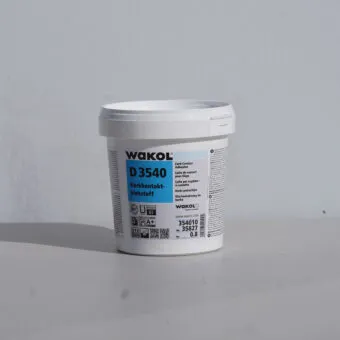
  • Cork adhesive (for glue-down tiles): approximately $1.00/sq ft coverage
  • T-moldings and stair nosing: available as matching accessories for each flooring design
  • Overage: We recommend ordering 10% extra to account for cuts and waste
  • Shipping: Delivered via FedEx across the continental United States

How to Estimate Your Project Cost

Use the flooring calculator on any product page. Enter your room dimensions in square feet and the calculator shows the number of boxes needed, total cost, and per-square-foot price.

Order free samples to compare colour, texture, and feel before choosing a floor.

How Cork Flooring Is Made: From Bark to Your Floor

Every piece of cork flooring sold at iCorkFloor starts as bark on a cork oak tree. Understanding how the material goes from forest to finished plank helps explain why cork floors perform the way they do and why some designs cost more than others.

Harvesting: No Trees Are Cut Down

Cork bark is peeled from the cork oak tree every 9 to 10 years in European cork forests (primarily Portugal and Spain). Asian cork oak is harvested every 12 to 15 years. This harvesting does not harm the tree. In fact, it prolongs the tree’s life, allowing individual trees to live 200 to 250 years. Cork harvesting is skilled work, often passed down through families, and harvesters are well compensated for their expertise.

After harvesting, the bark is left to dry for up to 18 months before processing begins.

From Wine Corks to Flooring

The wine industry uses approximately 95% of the world’s cork production for bottle stoppers. After the wine corks are cut from the bark, the remaining husks are sold to manufacturers like those who produce our Forna line. The flooring industry purchases cork in granulated form. These tiny grains, called agglomerated cork, are mixed with resin binders and pressed into sheets of varying quality and density.

  • Lower density – used for cork underlayment and the base layers of floating floors
  • Higher density – used for the finished surface of cork flooring products

Three Types of Cork Floor Surfaces

Traditional Cork Veneer

The classic cork look comes from larger pieces of cork bark that are thinly sliced and applied over the agglomerated cork base. Different slicing techniques create different patterns. The block pattern and ribbon pattern (seen in Forna’s “Leather” and “Birch” designs) use solid strips of bark that cannot be replicated with granulated cork. These patterns carry a premium price because the raw material itself costs more.

Stained Cork

Natural cork granules are pressed and then stained to achieve specific colours. Products like our Woodflow and Amber Streak designs use this technique to expand the colour palette beyond natural cork tones while maintaining the organic texture of real cork.

Printed Cork (Design Cork)

The newest technology in cork flooring borrows from the laminate industry. A high-resolution image is printed either onto specialty foil paper (mid-range) or directly onto the cork surface (premium “direct print” method). Our Design Cork collection includes wood-look, stone-look, and abstract patterns. Direct printing eliminates concerns about bond failure between the image layer and the cork.

Assembling a Cork Floating Plank

A finished Forna 12mm cork floating plank consists of:

  1. Bottom layer: 3mm cork underlay (sound absorption and moisture barrier)
  2. Core: 6mm E1 Class high-density fiberboard (structural stability and click-lock profile)
  3. Top layer: 3mm cork wear surface (the design you see and walk on)
  4. Finish: Natural Shield water-based polyurethane (scratch and stain protection)

The click-lock profile (Uniclic) is machined into the HDF core, allowing planks to snap together without adhesive.

Quality Control

Our Forna products are manufactured in Portugal and carry durability ratings for both residential (Domestic Class 23) and light commercial (Class 41) use. Each product comes with a 10-year residential wear warranty, a joint integrity warranty, and a lifetime structural warranty.

Want to see and feel the difference between traditional, stained, and printed cork? Order free samples to compare them side by side in your home.

Cork Floating vs. Glue-Down: Which Installation Method Should You Choose?

When shopping for cork flooring at iCorkFloor, you will notice two main installation types: floating (click-lock) and glue-down. Both use real cork and both are manufactured by Forna in Portugal. But they serve different situations. Here is a practical comparison based on our actual product specifications.

Cork Floating Floors

Our cork floating floors are engineered planks with three layers: a 3mm cork top layer (the surface you walk on), a 6mm high-density fiberboard core, and a 3mm cork underlay on the bottom. Total thickness is 10mm or 12mm depending on the product.

Key Specs

  • Thickness: 10mm (25/64″) or 12mm (1/2″)
  • Format: 900mm x 300mm planks (approximately 35″ x 12″)
  • Installation: Uniclic click-lock, no glue required
  • Noise reduction: Up to 19 dB built-in
  • Price range: Starting at $4.69/sq ft
  • Coverage per box: 17.44 sq ft (6 planks)

Best For

  • DIY installation (no special tools needed)
  • Condos and apartments where sound insulation matters
  • Basements (rated for below-grade installation)
  • Situations where you may want to remove the floor later
  • Installation over existing hard floors

Glue-Down Cork Tiles

Our glue-down cork tiles are solid cork tiles that are adhered directly to the subfloor with cork adhesive. They are thinner and create a permanent bond with the substrate.

Key Specs

  • Thickness: 4mm (5/32″) or 6mm (1/4″)
  • Format: Square tiles
  • Installation: Full-spread adhesive
  • Finish: Polyurethane wear layer

Best For

  • Kitchens and bathrooms (direct bond prevents water from getting underneath)
  • Rooms with low ceiling height (thinner profile saves headroom)
  • Areas with heavy furniture or equipment
  • When you want a permanent installation

Side-by-Side Comparison

Feature Floating Glue-Down
Thickness 10-12mm 4-6mm
DIY friendly Yes Moderate (adhesive work)
Sound absorption Excellent (built-in underlay) Good
Removable Yes No
Below grade Yes Yes (with moisture testing)
Radiant heat Compatible Compatible
Starting price $4.69/sq ft Varies by design

Our Recommendation

For most homes, we recommend starting with cork floating floors. The click-lock installation saves on professional installation costs, the built-in cork underlay delivers excellent sound performance, and the floor can be removed if needed. For kitchens and bathrooms where moisture is a daily concern, glue-down cork tiles provide the most secure installation.

Not sure which is right for your space? Order free samples of both types and test them in your home.

7 Real Benefits of Cork Flooring (From a US Cork Flooring Supplier)

iCorkFloor has sold Forna cork flooring across the United States for over a decade. This guide explains seven material properties to consider when comparing products.

1. Sound Absorption That You Can Measure

Cork flooring absorbs impact sound better than almost any hard-surface floor. Our Forna cork floating floors deliver up to 19 dB of noise reduction without any additional underlayment. That is because every plank has a built-in 3mm cork underlay on the bottom. In a condo or apartment where noise complaints are common, this is a meaningful difference.

2. Thermal Comfort Underfoot

Cork is a natural thermal insulator. Walk barefoot on cork in the middle of winter and you will notice the difference immediately compared to tile or laminate. The closed-cell structure of cork traps air, keeping the surface temperature closer to room temperature. All Forna cork floors are also compatible with hydronic and electric underfloor heating systems for homes that want extra warmth.

3. Durability Rated for Light Commercial Use

Our 12mm cork floating floors carry a Domestic Class 23 and Light Commercial Class 41 durability classification. That means they are tested and rated for use in offices, retail spaces, and other commercial settings with moderate foot traffic. For a residential home, that represents significant overbuilding. Each plank features a high-resistance Natural Shield water-based polyurethane wear layer that protects the 3mm cork top layer from everyday wear.

4. Easy Click-Lock Installation

Forna cork floating floors use a Uniclic click-lock profile. No glue, no nails. The planks click together and float over the subfloor. Our customers regularly complete their own installations without professional help. The 900mm x 300mm plank format (approximately 35 x 12 inches) is manageable for one person. With 6 planks per box covering 17.44 sq ft, you can cover a room quickly.

5. Suitable for Every Level of Your Home

Cork flooring can be installed above grade, on grade, and below grade. That includes basements. The built-in cork underlay acts as a moisture barrier, and the HDF core provides structural stability. For areas with higher moisture risk, our glue-down cork tiles at 6mm thickness offer an even lower-profile option.

6. Natural and Renewable Material

Cork bark is harvested from the cork oak tree every 9 to 10 years without cutting the tree down. The harvesting actually prolongs the life of the tree, which can live 200 to 250 years. Our Forna flooring is manufactured in Portugal, where cork harvesting has been a family trade for generations. The remaining cork after wine stopper production is granulated and pressed into the core material used in flooring.

7. Wide Range of Designs at Real Prices

We carry over 110 flooring products across multiple categories. Cork floating floors start at $4.69 per square foot. Swiss-made cork flooring with premium water-tight joints starts at $5.09 per square foot. Every product is available for free sample ordering so you can see the actual colour and texture in your home before committing.

Ready to Try Cork Flooring?

We offer 2 free samples per customer, shipped anywhere in the United States. Samples are approximately 6″ x 6″ and typically arrive within 3 to 10 business days. Browse our flooring collection and order your samples today.