Browse by Flooring Category
A Buyers Guide and Deep Dive For Cork Flooring
Cork floor is one of Nature's most environmentally friendly miracles. Cork flooring is exceptionally adaptable, elegant, and ecological since they are made entirely of natural and renewable materials. They're priced similarly to most hardwood floors, between $3 and $7 per square foot. Natural cork flooring is great for a do-it-yourself project that's simple to install, easy to maintain, and highly durable.
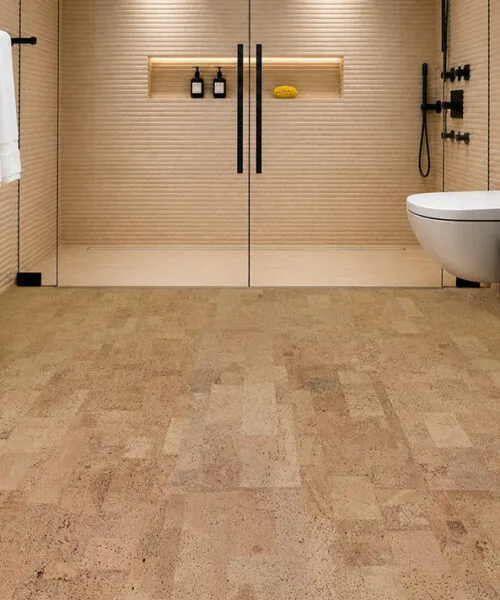
People like cork flooring because it feels soft but durable to touch and is relatively quiet. Your knees and back immediately relax when you step onto a cork floor. Cork feels resilient underfoot and can reduce impact sound, making it comfortable for kitchens, living spaces, bedrooms, and exercise rooms. It is also a good option for your mudroom and bathroom.
What distinguishes cork from other materials?
Cork material properties:
- Flexible but also durable
- Excellent insulator of heat and sound
- Naturally, mould and mildew resistant
- Warm to the touch,
- Fire-resistant
- Review the flooring’s emissions reports and care requirements.
- Stable at a range of temperatures
- Ressource renouvelable
- Highly adaptable, having not just a few, but hundreds of applications
Where does cork originate?
Cork is made from the bark of the cork oak tree, which thrives in the Mediterranean nations' forested areas. It is undoubtedly one of Nature's miraculous products, constantly recreating itself. The Highest Concentration of plantations is located in Spain and Portugal, which were established centuries ago by the wine business. After 25-30 years, a newly planted cork tree develops a thick bark around 2 inches wide "hefty. Skilled farmers delicately peel away around 12 of the bark with specialized instruments. This does not affect the tree; it will regrow in 8-12 years, and the process will begin again. Most of our cork products from Forna are harvested and manufactured in Portugal and other parts of Europe.
Over its 300-500-year productive life, a cork oak tree produces 50 harvests. This is the source of hundreds of cork flooring! Compared to most hardwood flooring, which involves tree harvesting and just a few floors, it's easy to understand why cork is one of the most sustainable materials available.
After that, the bark is chopped into huge uniform sheets of 4'-5' long x 2'-3' broad. They are carefully carried to a mill, where small surface layers are veneered off. The densest layer is immediately under the outer bark layers, whereas the interior layers are softer and less dense.
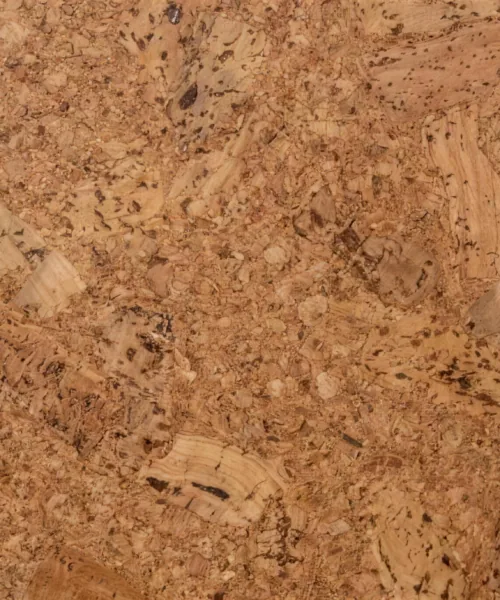
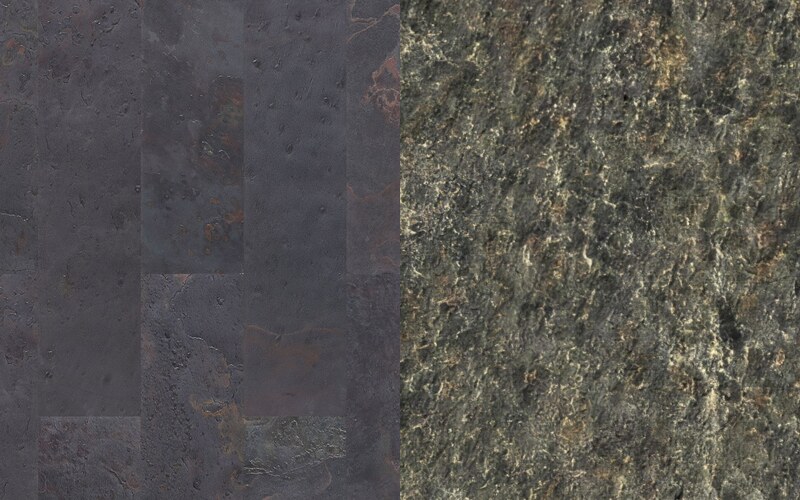
The cork patterns visible on a cork floor are derived directly from the veneer's grain pattern. Just like the grain of oak differs from that of maple or walnut, cork has a variety of grain patterns. These veneer designs are found on the top layer of most cork flooring.
Properties
Mother Nature developed the bark of the cork oak tree particularly to safeguard it throughout its existence. Cork bark helps protect the tree from heat, temperature changes, and many insects. Product fire and antimicrobial performance depends on the manufactured floor and its tested assembly.
Cork's qualities are obtained naturally from its inner cell structure and chemical makeup. For instance, cork's honeycomb structure includes between 30 and 40 million cells per cubic centimetre! Cork's inherent properties are derived from this unique cellular structure, and each of these cells contains suberin. This waxy substance confers resistance to insects, mould, and mildew on the cork.
Uses
Cork has hundreds of applications, including bottle stoppers, floats for fishing nets, women's purses, shoe and sandal bottoms, and even furniture. In 1891, John Smith discovered how to make agglomerated cork, which opened up new materials such as wall tiling, flooring, and underlayment. Agglomeration is the process of gluing together small pieces of cork to create bigger chunks of varying shapes and sizes.
Since the turn of the twentieth century, cork floors have been popular in Europe, where they can be found in several prestigious locations. This includes the Library of Congress, the Mayo Clinic and Plummer Building, the offices of several Fortune 500 companies, several churches and museums, and Frank Lloyd Wright's Fallingwater residence.
Recent advancements in technology have resulted in the availability of a diversity of new patterns and colours to match the needs of today's design trends.
Cork flooring options include floating planks and adhesive-backed tiles.
What is the manufacturing process for cork flooring?
These cork floor tiles are constructed entirely of cork and were adhered to the flooring with adhesive. We also offer them to decorate walls and ceiling.
The finish mainly consisted of oil and wax. Numerous individuals say that these original tiles are still in excellent condition after 75 years or more! Others have complained about the edges curling up or the cork drying out and becoming brittle and highly worn.
Cork has made significant strides as a robust floor covering since 2000.
Not only has the finish improved, but so has the installation method.
Nowadays, most cork flooring is available in two basic configurations: engineered floating floors and solid tiles.
Engineered floating flooring consisting of three layers
1. Layer: Cork veneered top layer (1/16" to 1/8")
2. Layer: 1/4" thick high-density fiberboard (HDF)
3. Layer: Cork agglomerated on the bottom layer (1/16")
Floating flooring planks compared to Glue Down Tiles
Engineered floating cork floors have dominated the cork flooring industry for the last 15 years for a variety of reasons:
- Simple do-it-yourself installation - no specialists required
- There is no need for adhesive and no noxious odours
- Subfloor preparation is simplified.
- Installation is easier and faster
- Additional styles to select from
- More stable - no curling of the edge
- Finish and maintenance requirements
- No initial sealing is necessary.
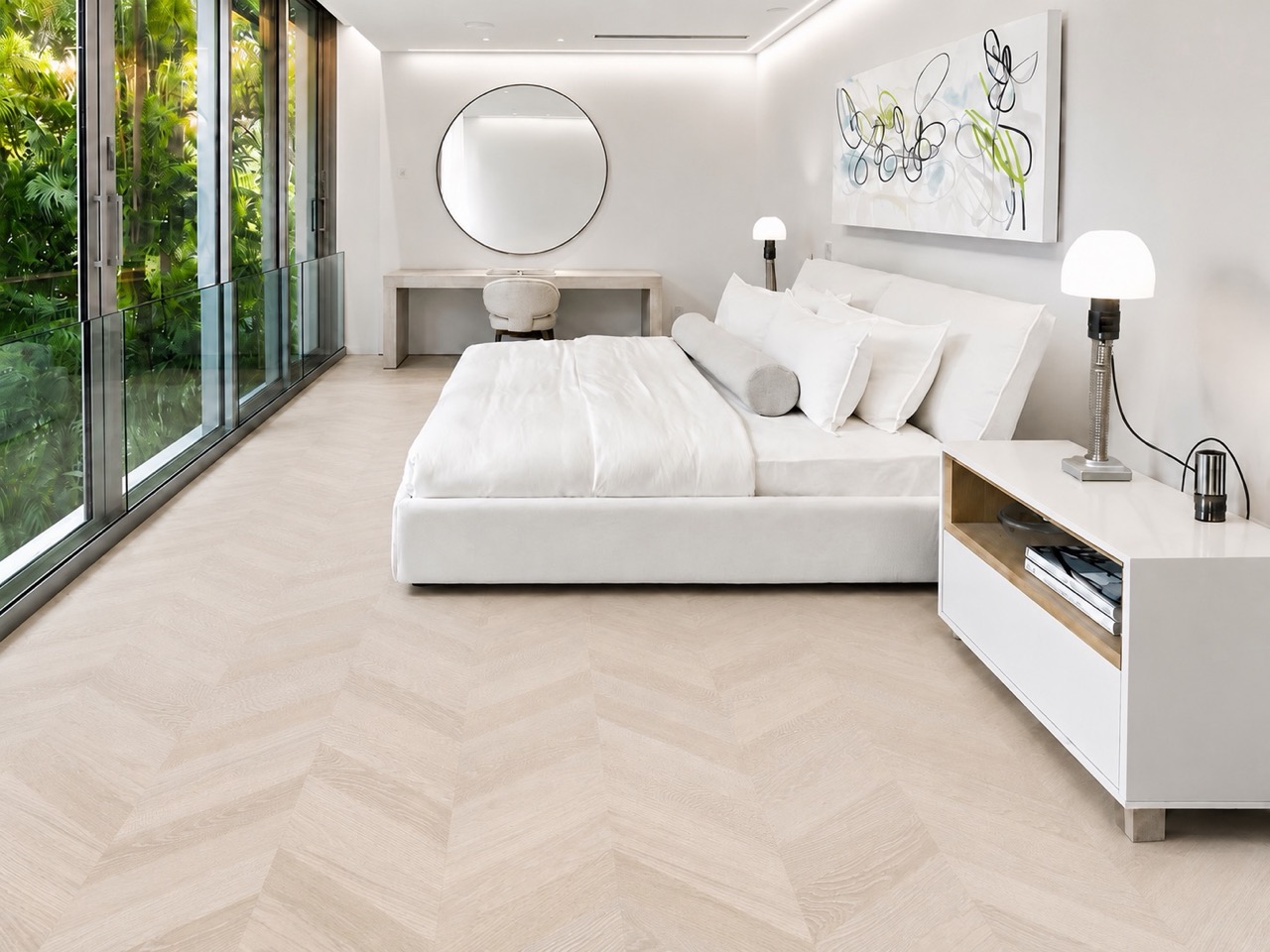
Numerous colors and patterns
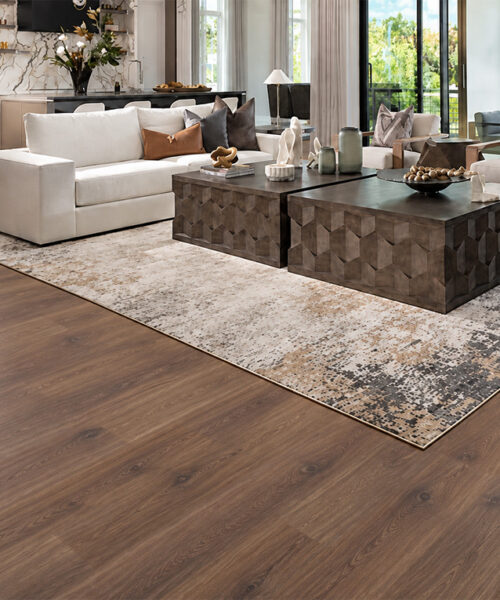
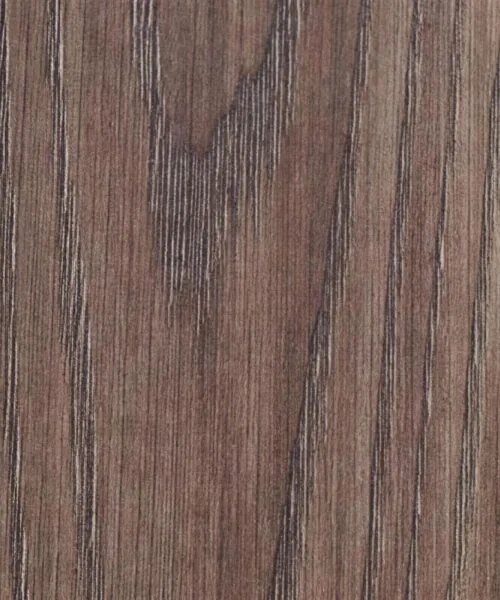
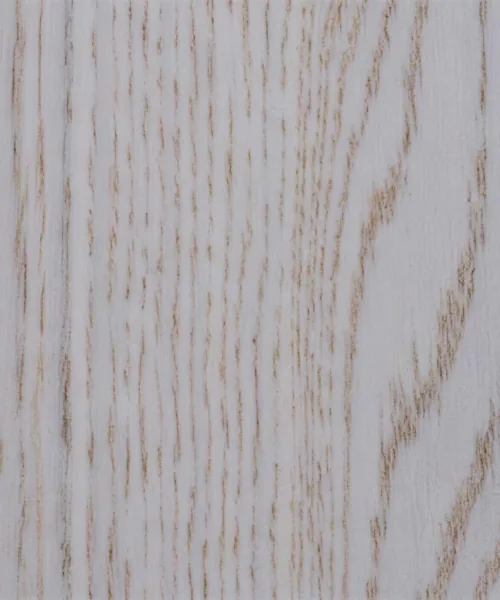
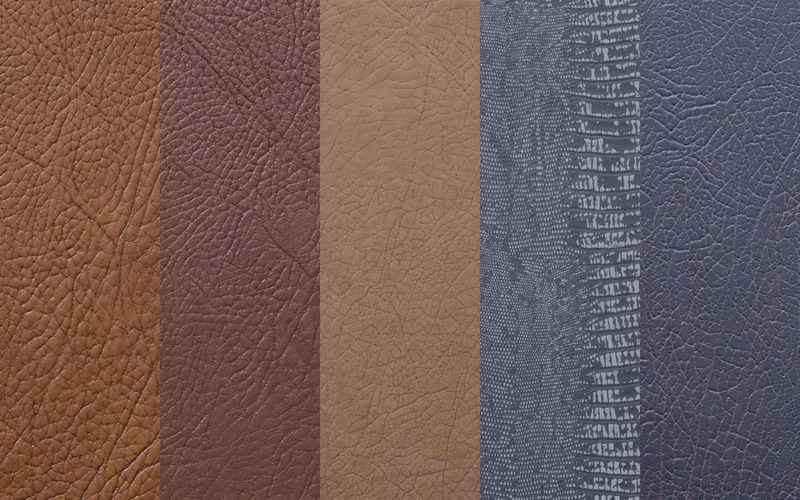
Historically, all cork had a light brown natural tone with darker parts scattered throughout. Today, cork flooring is available in various colors by coloring the surface layer. These stains are attractive and distinctive and may be used to improve the aesthetic of any space. However, there are a few disadvantages.
Notably, if the floor is significantly scraped or gouged, the natural cork color will reveal itself beneath the surface and contrast with the surface color. This will require a specific colored touch-up paint that is not always readily available. Typically, cork producers do not supply matching stains in a package to assist you; thus, you must locate them independently.
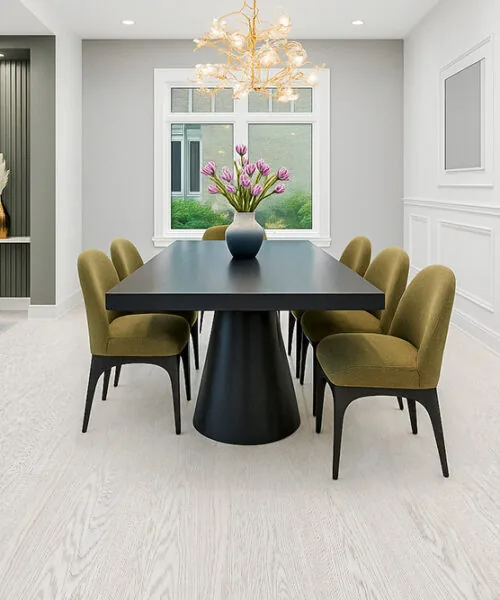
Additionally, brighter colors like white tend to reveal seams more prominently, detracting from the overall appearance. These are not severe issues, but they should be considered before purchasing.
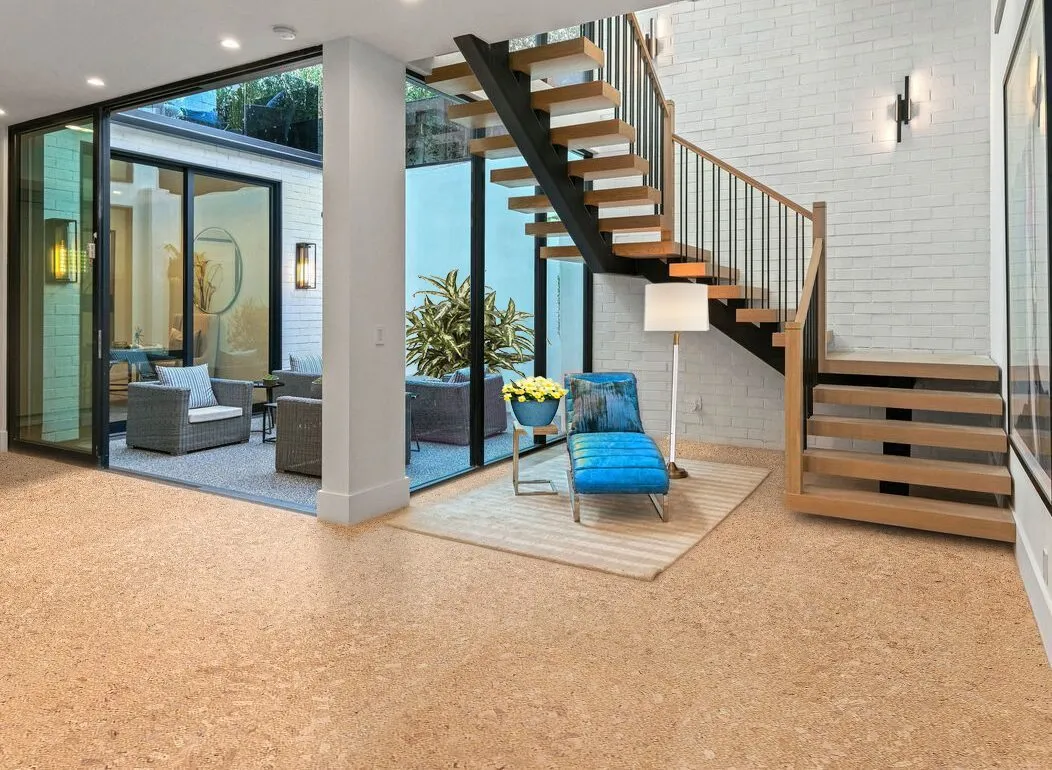
Natural cork colors (i.e., untreated) are by far the most popular due to the following reasons:
- The warm hues complement the majority of cabinets and furnishings.
- They are excellent at concealing dirt and concealing seams.
What are the best cork floor designs?
Compare cork flooring colours and patterns using samples and room photographs.
In general, we've discovered that color is more essential than design, as the design tends to fade into the shade and colors, particularly when viewed from broad angles and in weak light. If you're excited by a specific crazy design, go for it. If you want to be more conservative, choose something neutral and quiet. Additionally, it is dependent on the illumination and the angle from which you are seeing it. Natural cork color (unstained) and practically any design, in our opinion, perform exceptionally well in the majority of homes. However, obtain some of our samples and evaluate them in your specific situation. Each of our products has a "Get Free Samples" button which lets you order samples of the products you are interested in.
What about upkeep?
Many individuals are concerned about the cork floor's finish. This typically entails wetness, children, and dogs.
In terms of moisture, we've examined how suberin naturally repels moisture. Additionally, cork producers have created polyurethanes, UV-cured acrylics, and unique mixes that resist water and abrasion very well.
As a result, cork flooring receives few complaints – and most of our floors have a warranty for wear for many years of use.
Cork is a natural material that may be used in wine bottles and fishing bobbers without growing mouldy. Frank Lloyd Wright employed cork on the flooring, walls, and within the showers of various bathrooms at his globally renowned home, Fallingwater. There is no mould on the cork at all.
However, further protection may be necessary for high-demand applications such as kitchens and other high-traffic locations such as entryways or corridors. We propose that you seal the floor with a non-toxic water-based polyurethane we offer for sale.
Simple sweeping and moist mopping are all that are required for routine upkeep. If your floor begins to show signs of wear, refinishing it with a new coat of polyurethane will revive it.
Cork floors that are properly maintained will last for decades.
Cork Underlayment
Cork has also gained popularity as a sound-absorbing and thermally efficient underlayment.
We offer cork underlayment in different thicknesses in our store:
Cork underlayment has grown in popularity as a subflooring material. Because of its excellent insulating properties, the underlayment can be used for ceramic tile, hardwood flooring, carpets, and other solid surface floors, particularly in flats and condominiums.
What to look for when shopping for a cork floor
Cork flooring products differ in construction, adhesives, finishes, emissions certification and maintenance requirements. Review these details for the selected product rather than treating all cork flooring as equivalent.
Let's take a closer look at the manufacturing process of cork to comprehend some of these distinctions better:
Durability = Density and Resiliency
Manufacturers choose a cork veneer from the outside section of the cork bark for the top layer because it is denser and older than the inner piece, which is younger and softer. The inner section of the cork bark is pulverized and utilized as a built-in underlayment on the bottom of the plank.
While there may not appear to be significant variations, close investigation and testing indicate that some cork is softer and less robust than others. In contrast, others are firmer and denser, resulting in a more lasting product.
Cork is well-known for its self-healing and resilience to impact. Try digging your fingernails into some cork; after approximately an hour, most of the dent will have vanished. The thicker the cork, the more suberin cells there are, and hence the greater the performance.
Additionally, the top and bottom layers differ in total thickness. When two pieces of cork flooring are placed next to one another, these variances are readily apparent. While it is preferable to have thicker cork on the top and bottom, this does not always imply denser cork. You must either test them yourself or consult the specifications.
Non-toxic adhesives
The adhesive is applied between each layer of cork and between the grains of the backing. Since most of our cork and our products originate from Europe, adhesives' regulations and emissions are often far stricter than in North America. While most producers satisfy the E0 and CARB 2 urea-formaldehyde criteria, not all are third-party certified. It would help verify since everyone now claims their product has no formaldehyde.
China is also a competitor in the cork flooring market. Regrettably, the standards there are inconsistent. As a result, we offer most products from Europe or pattern very closely with manufacturers and quality control to ensure a safe product.
Fiberboard core with a high density (HDF)
All cork floating flooring panels include a central part made of high-density fiberboard (HDF). Some include urea-formaldehyde, whereas others do not. Some are produced from recycled FSC-certified wood fibres, while others are not. FSC stands for Forest Stewardship Council, a non-profit organization based in the United States that certifies sustainable forest management, social equality, and environmental stewardship. We propose using FSC-certified HDF free of added urea-formaldehyde, exterior grade, and wax impregnated all around the perimeter.
Very low-VOC coatings
This is where some significant discrepancies may manifest. Before the invention of contemporary high-performance finishes, only natural oils and waxes were employed. Hundreds of years ago, natural linseed oils and beeswax were quite effective. Cork flooring with oil wax finishes can still be seen in historic courthouses and libraries.
While most modern finishes are UV-cured in the factory, some may continue to emit volatile organic compounds for weeks or months after installation. This information should be included in any respectable manufacturer's Material Safety Data Sheet (MSDS).
Commercial treatments for cork are now incredibly durable and will extend the life of the cork for years before it has to be recoated. While this is functional and beneficial, the sensation of cork on your feet and the odour are not the same. If you are chemically sensitive or allergic, it is recommended to test a little quantity first.
Warranties
The majority of residential guarantees include structural integrity, which indicates that the structure's top, middle, and bottom layers will not delaminate. Some provide a warranty on the top layer's finish, which is excellent, but these warranties seldom cover typical wear and tear.
They often conceal any flaws in the finish, such as peeling, pitting, or excessive thinness. Most cork companies provide a ten-year warranty, and some offer a lifetime warranty, which is fantastic. Commercial warranties are typically significantly shorter, ranging from 5 to 10 years, although new finishes come with extended warranties of up to 15 years.
Bear in mind that a residential or commercial warranty will not cover misuse if you have large dogs or children who ride skateboards. Deep scratches and gouges, in general, maybe fixed using wood putty, and the natural color variations effectively conceal them. The same is valid for concealing dirt.
Pay attention when shopping around for the best warranty, but keep in mind that all flooring warranties cover only manufacturing faults and never cover removal or installation fees unless the maker is shown to have been negligent.
Installation
Cork tiles are attached to an absolutely flat, flawlessly smooth substrate. For glue-down cork flooring, we recommend water-based products.
Cork floating flooring is compatible with most wood and concrete subfloors. The majority of brands operate in the same way. Additionally, they may be put over existing vinyl or laminate floors.
Cork floating flooring has been created with click-together edges; no adhesive is required. Installation is quite simple for most do-it-yourselfers, requiring only a few tools. The majority of rooms may be finished in a matter of hours.
Consider hiring a professional if you're experiencing any of the following:
- You're not adept with tools;
- you want a faultless appearance;
- your subfloors are uneven and require prep-work;
- you're short on time;
Consider performing the task yourself if:
- You possess some fundamental abilities and own specific tools.
- Your subfloors are pretty level;
- you have the time to complete the job correctly;
Cork flooring can be installed in a variety of locations.
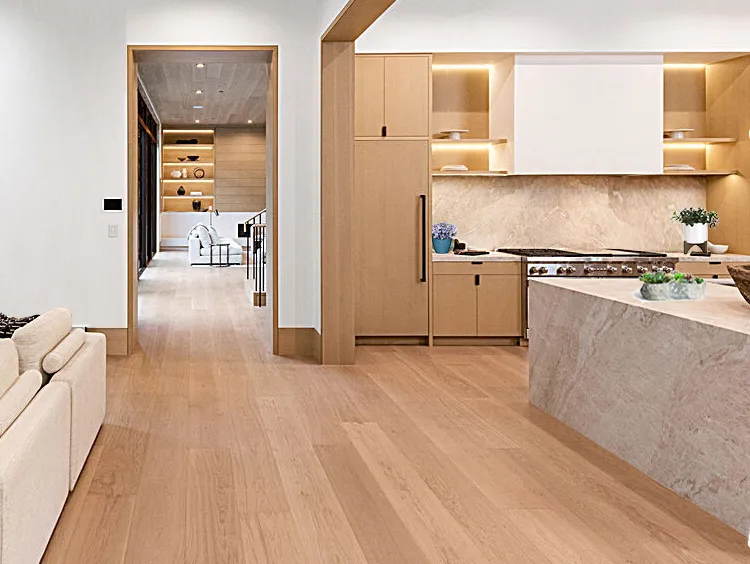
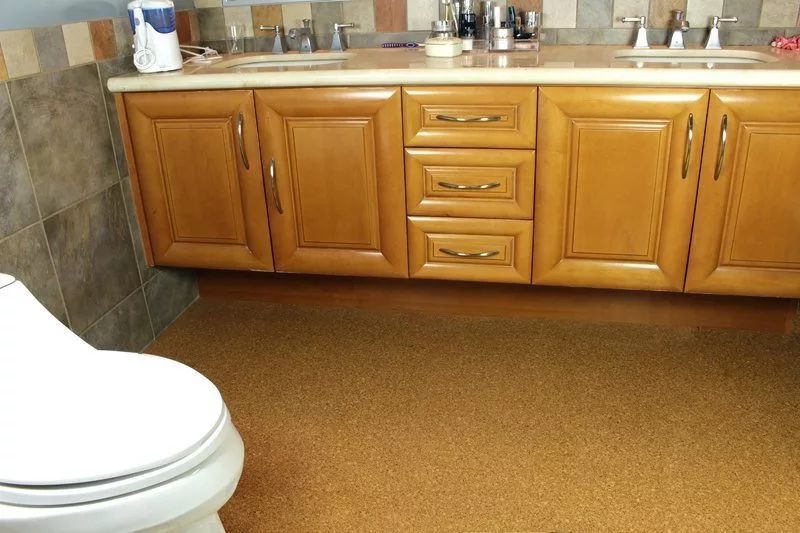
Cork is frequently used in kitchens, baths, recreation spaces, dens, and living rooms. The more cork you use, the more elegant it seems.
Large swaths of cork look far nicer than a few little bits here and there.
This is true for the majority of flooring.
What about bathrooms, mudrooms and basements?
Cork and water make an excellent combination, which is why it is used in wine bottles and fishing bobbers. On the other hand, the finishes and adhesives are not intended to be submerged for extended periods. The high-density fiberboard core has been treated with wax on most cork floating floors to prevent moisture absorption. Ascertain that your cork flooring includes this function.
If you choose the right installation type, the cork flooring is installed and maintained correctly; you can use it in almost all indoor locations.
For wet areas like mudrooms, bathrooms and commercial applications, we suggest glue down tiles with two layers of water-based polyurethane.
Cork floating flooring is a suitable option for most other rooms like children's playroom, bedrooms, kitchen, living rooms, home-cinema rooms and gyms.
How about radiant-heated floors?
Yes, cork works well here as well. Bear in mind that radiant heat is infrared energy that may pass through virtually any substance, including concrete, wood, glass, metal, and insulation. Cork is an excellent thermal insulator, but it does not prevent infrared heat from passing through. We've worked with scores of clients who have radiant-heated floors and have heard nothing but praise for how well they function.
How do you maintain cork flooring?
Cork flooring requires similar maintenance to hardwood, linoleum, or bamboo flooring. Regular dusting and damp mopping will be enough to keep it in good condition. Most manufacturers urge consumers to avoid flooding, as frequent flooding will cause the edges to bulge. Avoid strong cleaning chemicals and excessive water, as you would with any flooring.
When cared for correctly, Cork flooring should last as long as your home.
Most deep scratches or gouges may be repaired with standard wood putty if repairs are necessary. In high-traffic areas, a couple of coats of our water-based polyurethane may be required to extend the life of the finish.
How much additional food should I order?
Generally, we recommend:
- For Glue down tiles, an additional 5% and
- For Floating floor planks, an extra 10%.
This is determined by the room's size and form. Large square rooms devoid of closets will generate the least waste. When closets, hallways, L-shaped sections, or curved or slanted walls are included in your estimates, add 10%. While money is a consideration, purchasing an additional box or two is always a sensible move. This is true for all types of flooring. As dealers, we frequently receive queries for out-of-date flooring designs or patterns to be employed in a new expansion or repair of a damaged section. Customers spend hours looking high and low for a few additional planks that should have been ordered as an insurance policy with the first transaction. After all, flooring is a significant financial commitment. Isn't it worth safeguarding?
Do you require assistance with measuring or making decisions?
Call us at +1 (888) 346-0922 or email us at our contact form, and one of our specialists will gladly assist you in selecting the best floor for your application and budget.
Cork flooring is made with renewable cork bark. Compare the product’s construction, surface finish, sourcing and emissions documentation.
 Ships USA-wide


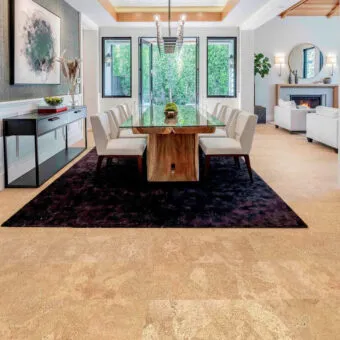 Flooring
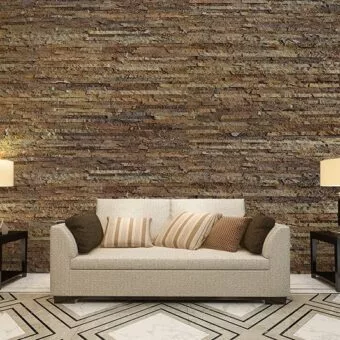 Wall & Ceiling Tiles
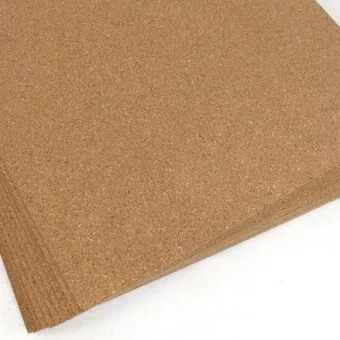 Cork Underlayment
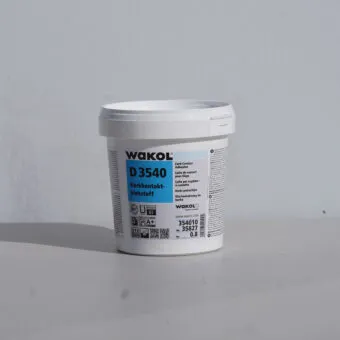 Supplies & Guides