 Ships USA-wide


Cork Flooring: A Floor That Is Easy to Keep Clean
For a dust-conscious home, review the selected flooring’s emissions documentation and cleaning requirements.
Why Cork Flooring Is Easy to Keep Clean
1. Smooth, Non-Dust-Trapping Surface
Unlike carpet, which holds dust and hair deep within its fibers, cork flooring has a smooth, sealed surface that does not harbor dust, pollen, or pet dander. Dust and dirt stay on the surface, where they can be easily removed by sweeping or damp mopping.
This makes cork especially beneficial for people with:
-
Dust and pet hair
-
Pet hair and dander
-
Seasonal pollen sensitivities
2. Naturally Low-VOC for Better Indoor Air Quality
Cork flooring is typically finished with very low-VOC or zero-VOC finishes, making it a good alternative to many conventional flooring materials.
-
Low VOC emissions help reduce indoor air pollution
-
Less off-gassing means fewer respiratory irritants
-
Well suited to homes with children and seniors
Compared to many laminates, bamboo products, or vinyl floors—which may contain higher VOC adhesives or coatings—cork consistently ranks among the cleanest flooring options for indoor air quality.
3. Contains Natural Suberin
Cork contains suberin, a natural waxy substance that acts as a built-in defense against:
-
Mold
-
Mildew
-
Bacteria
-
Dust mites
Cork’s smooth surface is easy to wipe and sweep clean. Once cork flooring is properly sealed, its micro-pockets are closed, making the surface even easier to clean and maintain.
4. Moisture-Resistant and Mold-Resistant
Mould and mildew can develop when moisture is not controlled. Sealing cork flooring does not replace moisture control or the installation guide’s humidity limits.

This makes cork flooring suitable for:
-
Living rooms
-
Bedrooms
-
Home offices
-
Kitchens
-
Properly prepared bathrooms
Top Easy-to-Clean Flooring Options (Compared)
✔ Cork Flooring (Top Choice)
-
Non-porous once sealed
-
Easy to sweep or damp-mop
-
Contains natural suberin
-
Low VOC finishes
-
Easy to sweep clean
✔ Laminate Flooring
-
Smooth surface, easy to clean
-
Can be low-emission if low-VOC certified
-
VOC levels depend heavily on quality and brand
✔ Luxury Vinyl (LVT/LVP)
-
Non-porous and easy to clean
-
Some products may emit VOCs
-
Quality and certifications matter
⚠ Bamboo Flooring
-
Can contain higher VOC adhesives
-
Often requires chemical finishes
-
Harder to keep free of dust and pet hair
Flooring to Approach with Caution
❌ Carpet
Carpet is one of the flooring choices that are harder to keep clean. It traps:
-
Dust mites
-
Pet dander
-
Pollen
-
Mold spores
Hard-surface flooring can be easier to clean than carpet. Review the cleaning requirements and emissions documentation for the selected product.
Enjoy an Easy-to-Clean, Comfortable Home
To maximize the benefits of cork flooring:
-
Use a HEPA-filter vacuum
-
Damp-mop regularly
-
Maintain proper indoor humidity levels
-
Ensure professional or proper installation to avoid gaps where dirt can collect
EASY-CLEAN FLOORING – GREEN CORK FLOORING
Easy-Care Floors with Cork
For indoor air concerns, review the flooring’s emissions reports, adhesive, finish and cleaning requirements.
Cork contains suberin, a wax-like substance that contributes to water resistance. The complete flooring product still needs moisture control and the specified finish and care.
A Natural Material with a Proven History
Cork is a natural material harvested from the bark of the cork oak tree, native to the Mediterranean region. Harvesting begins when the tree reaches about 20 years of age and continues every nine years—without cutting down the tree. A single cork oak can live and produce cork for over 150 years.
Cork’s unique honeycomb-like cellular structure contains millions of microscopic air cells per cubic inch, creating natural cushioning, insulation, and sound absorption. This same structure helps cork resist dust, moisture, insects, and decay.
Cork is also:
-
Fire-resistant (chars without releasing toxic fumes)
-
Highly resilient (recovers up to 90% after compression)
-
Durable enough to be used in industrial and precision applications
Sustainable, Renewable, and Healthy
Cork oak forests cover millions of acres across Portugal, Spain, Italy, France, and North Africa. These forests play a critical role in:
-
Carbon storage
-
Soil conservation
-
Climate regulation
A harvested cork oak absorbs significantly more carbon than an unharvested tree, making cork one of the most sustainable building materials available today.
Comfort You Can Breathe Easy With
Cork flooring offers a wide range of benefits that make it one of the most popular and health-conscious flooring choices available today. Dust and dirt sweep away easily, and your home stays comfortable underfoot.
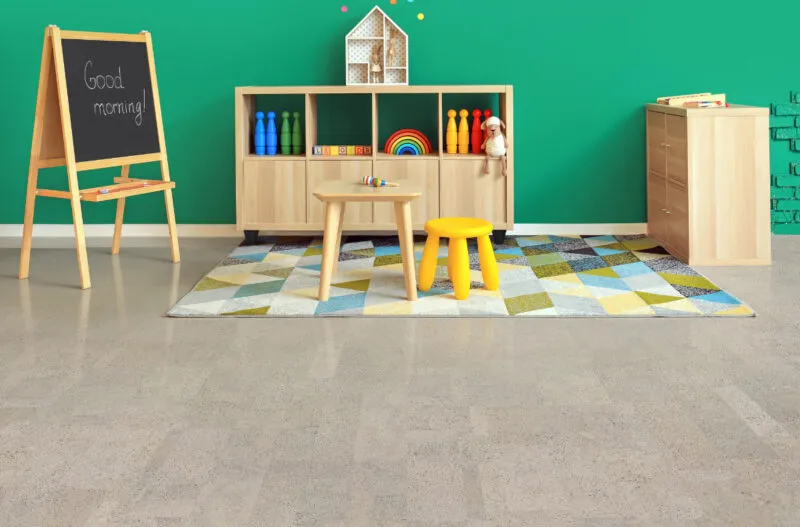
Add cork’s sustainability and renewability, and it easily rises to the top of the flooring options list. Best of all, cork flooring can last for decades—and you can feel confident knowing not a single tree was cut down to create it.
 Flooring
 Wall & Ceiling Tiles
 Cork Underlayment
 Supplies & Guides