 Ships USA-wide

Cork Adhesive and Polyurethane Finish
Installation supply answer
Cork adhesive and polyurethane finish
Glue-down cork tile projects need compatible adhesive, clean substrate prep, rolling pressure, and the specified finish or top coat. Match supplies to the cork product before installation day.
- Choose adhesive based on the cork tile, substrate, spread method, and room conditions.
- Choose polyurethane or top coat based on product instructions and room use.
- Ask a specialist before combining products from different systems.
Why Water-Based Contact Cement Is Essential for Cork Glue-Down Tiles
Modern cork tiles use water-based binders and finishes. Install them with the specified water-based contact cement. Solvent-based adhesive can break down the cork binders and permanently damage the flooring.
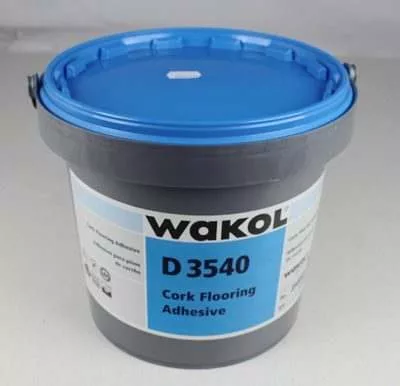
The Role of Water-Based Contact Cement
Water-based contact cement is the preferred adhesive for installing cork glue-down tiles. Unlike traditional “wet set” glues, contact cement requires application to both surfaces: the back of the cork tile and the subfloor (usually concrete or plywood). After application, both surfaces must be allowed to dry or “flash” before bonding.
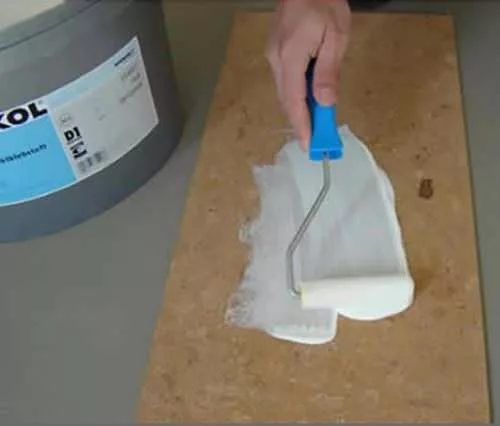
Observe the specified adhesive flash time. Installing cork tiles into wet adhesive can cause swelling, warping or curling, even if the floor initially looks level. Moisture-damaged tiles may need removal and replacement; follow the adhesive and flooring instructions.
Benefits of Water-Based Contact Cement
Water-based contact cement reduces moisture exposure during installation. The adhesive, typically applied as thickly as mayonnaise on bread, dries within 60 minutes, preserving the natural shape and integrity of the cork tile. Once dry, tiles can be pressed into place in a precise and methodical layout.
To maintain adhesive performance, it’s essential that the glue applied to the subfloor remains clean and untouched. Walking over the dried glue compromises the bond. That’s why it’s best to work in quadrants and use chalk lines every few rows to keep the pattern straight and consistent.
Availability in North America and Europe
Water-based contact cements are widely available through professional flooring suppliers.
In the USA, however, suitable options are more limited. Here are some trusted water-based contact adhesives that are approved for use with cork glue-down tiles (listed in order of manufacturer preference):
Approved Water-Based Contact Adhesives:
-
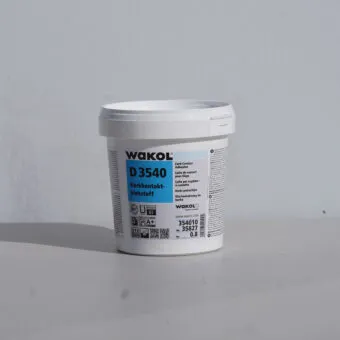
Wakol D3540 – Professional-grade and widely used by installers
-
Roberts R1030 – Reliable and readily available in North America
-
LePage Pres‑Tite Low‑Odour Contact Cement – Excellent for residential installations
-
3M Fastbond 30-NF Green – Industrial-grade, for professional use only
⚠️ Important: If you’re considering an adhesive not listed above, consult Forna Cork Technical Support before purchasing. Using an unapproved product could result in installation failure and voided warranties.
Match cork adhesive, finish, and tile supplies
Match the adhesive and finish to the cork product and installation instructions.
Match cork adhesive and finish before installation
Match the adhesive and finish to the cork product, subfloor and installation instructions.
Frequently asked questions
What adhesive is used for glue-down cork tiles?
Glue-down cork tile projects need the adhesive specified for the product and substrate. Confirm spread method, open time, rolling, and room conditions before installation.
Do glue-down cork tiles need polyurethane?
Many glue-down cork tile installations need the specified finish or top coat after installation. Follow the product instructions and match the finish to room use.
Should I buy adhesive and finish before choosing cork tiles?
Choose the cork tile first, then confirm compatible adhesive, finish, substrate preparation, and installation timing before ordering supplies.
 Flooring
 Wall & Ceiling Tiles
 Cork Underlayment
 Supplies & Guides