 Ships USA-wide

Basement flooring answer
Basement cork flooring
Basement cork flooring is worth comparing for dry basements when warmth, quiet rooms, and underfoot comfort matter. Moisture testing, approved vapor protection, floating or click-lock installation, and samples should be planned before buying.
- Use cork in dry basements only after moisture questions are answered.
- Install an approved vapor barrier first, then use a floating or click-lock floor.
- Glue-down tile needs a plywood subfloor above the vapor barrier and separate project review.
Best Flooring for Basements That Flood
An evening rainstorm may create a soothing ambiance, but it can also bring something far less pleasant: basement flooding. Flooding can happen any time of year when unusual weather patterns unleash heavy rain, and for many homeowners, the basement is the most vulnerable part of the house.
If you’re like most homeowners, you want to maximize every square foot of your basement—whether it’s a cozy family room, a game room, or a home gym. Choosing the right flooring can protect your investment and prevent costly repairs when water intrusion strikes. The key is selecting a surface that can withstand potential flooding rather than replacing your floors every time the waters rise.
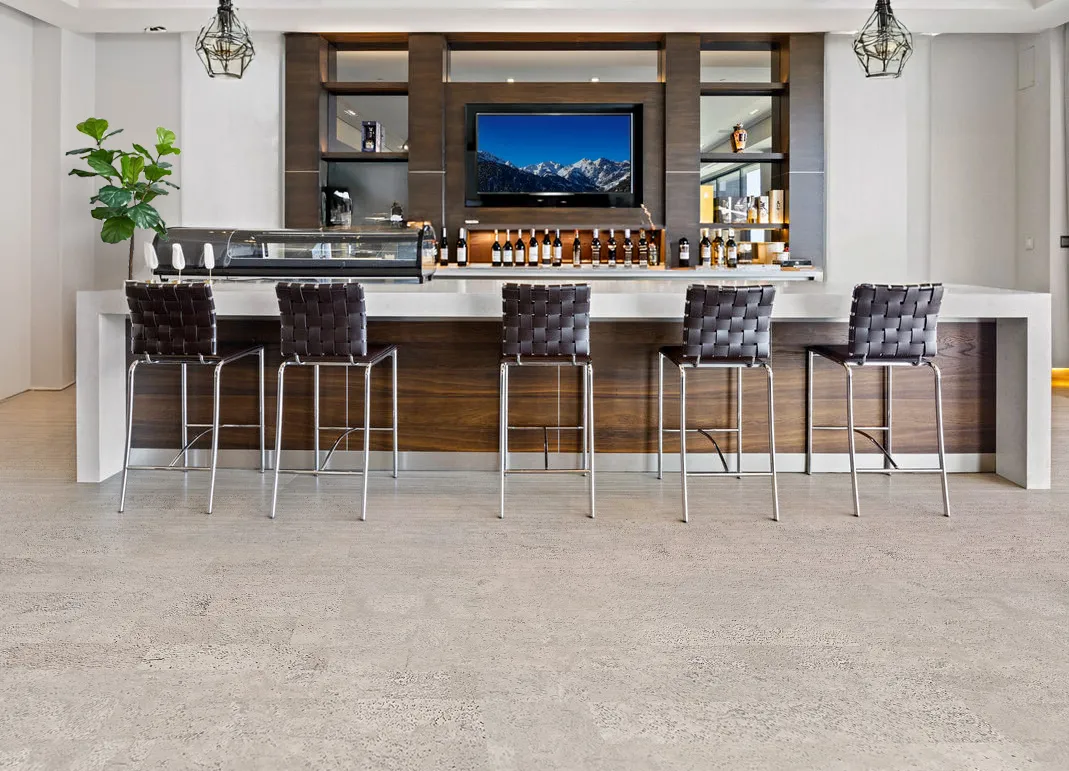
Best Flooring Choices for Basements Without a Flooding History
If your basement has no history of flooding, cork floating flooring is one of the best options available.
-
Warm & Comfortable: Naturally insulating and soft underfoot.
-
Materials: review the product’s construction and emissions documentation.
-
Quiet & Durable: Excellent sound absorption and long-lasting performance.
-
Safe & Resilient: Provides grip underfoot and holds up well to everyday wear.
Cork floating flooring can be used in a dry basement when slab moisture, vapour-barrier requirements and indoor conditions meet the installation guide.
Best Flooring for Flood-Prone Basements
If your basement has experienced flooding in the past—or there’s a significant chance it could happen again—you need a flooring material that is engineered for water resistance. Two standout options are:
1. Forna Natural Composite Flooring with Hydrowood Core
This flooring pairs a natural linseed composite surface with a waterproof Hydrowood core and attached cork backing. Use the approved glue-down system where the site conditions require it.
2. TechSlate Floating Flooring
Made from fiber cement with a tough, scratch-resistant KORUS surface coating, TechSlate is 100% waterproof and built for resilience in commercial and residential settings.
Both of these floors are designed for glue-down installation, which prevents water from seeping beneath the panels and causing hidden damage.
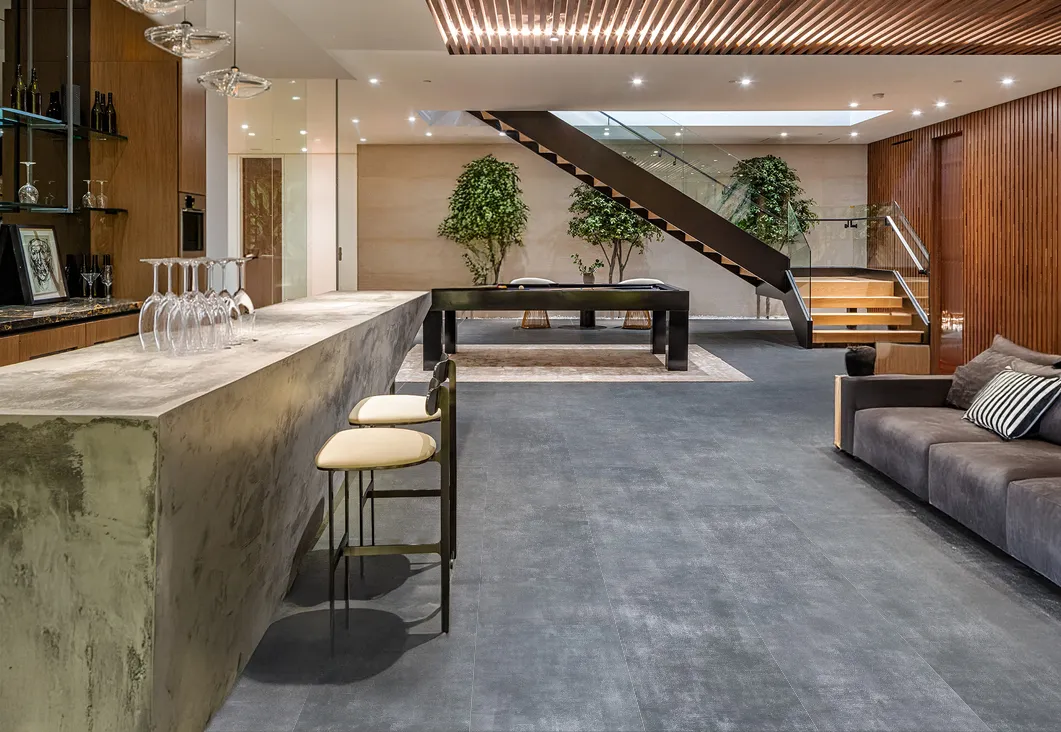
Flooring Options to Avoid in Flood-Prone Basements
Not every flooring material is a good match for a wet basement. Here’s why some common options fall short:
-
Carpet: Prone to mold and mildew, not safe or sanitary after flooding.
-
Concrete: Durable but cold, hard, and uncomfortable without additional treatments.
-
Laminate: Not waterproof, easily swells and warps when exposed to water.
-
Porcelain Tile: Waterproof but often too cold; tiles can crack under impact; installation is costly.
-
Vinyl: Made with chemicals and not an organic material; can off-gas in enclosed spaces.
-
Rubber Flooring: Strong odor, chemical-based, and not visually appealing for most living spaces.
Additional Considerations
Before choosing your basement flooring, it’s essential to understand the source of your flooding:
-
Water from above (rainwater seepage): Forna Natural Composite with Hydrowood or TechSlate will perform well.
-
Water from below (groundwater pressure): Even the best flooring may fail if hydrostatic pressure lifts water through your slab. In this case, applying a cement sealant or installing a waterproofing system is a critical first step before flooring.
Before ordering
Before choosing basement flooring, assess slab moisture and the risk of flooding. Compare cork, TechSlate and Hydrowood Natural Composite using the selected product’s installation limits and warranty. Flooring does not prevent flood damage to the building.
Plan basement cork flooring before ordering
Check basement moisture, subfloor condition, approved vapour protection and finished height before choosing flooring.
Check basement moisture before choosing flooring
Check basement moisture, subfloor condition, finished height and installation requirements before ordering.
Frequently asked questions
Is cork flooring good for basements?
Cork can work in dry basements when moisture is controlled, the substrate meets product requirements, and a floating or click-lock floor is installed over approved vapor protection.
What basement cork flooring installation do you recommend?
Use a floating or click-lock floor over approved vapor protection. Glue-down tile is a separate assembly that needs a plywood subfloor above the vapor barrier and project review.
Do I need a moisture test before basement cork flooring?
Yes. Moisture questions should be answered before ordering cork, vapor protection, underlayment, or full boxes for a basement floor.
Should I order basement cork flooring samples first?
iCorkfloor recommends samples so buyers can compare color, texture, thickness, warmth, and basement lighting before ordering full boxes.
 Flooring
 Wall & Ceiling Tiles
 Cork Underlayment
 Supplies & Guides