 Ships USA-wide

????️ Anti-Slip Resilient Flooring: Why Cork Outperforms Vinyl, Laminate & Tile
When choosing flooring, slip resistance isn’t optional — it’s critical. Whether for homes, rentals, or commercial spaces, safer flooring reduces accidents, liability, and long-term maintenance issues.
In this article, we’ll break down real test data and compare cork flooring against vinyl, laminate, and tile — so you can make the safest and smartest choice.

???? Real Test Data: Proven Slip Resistance
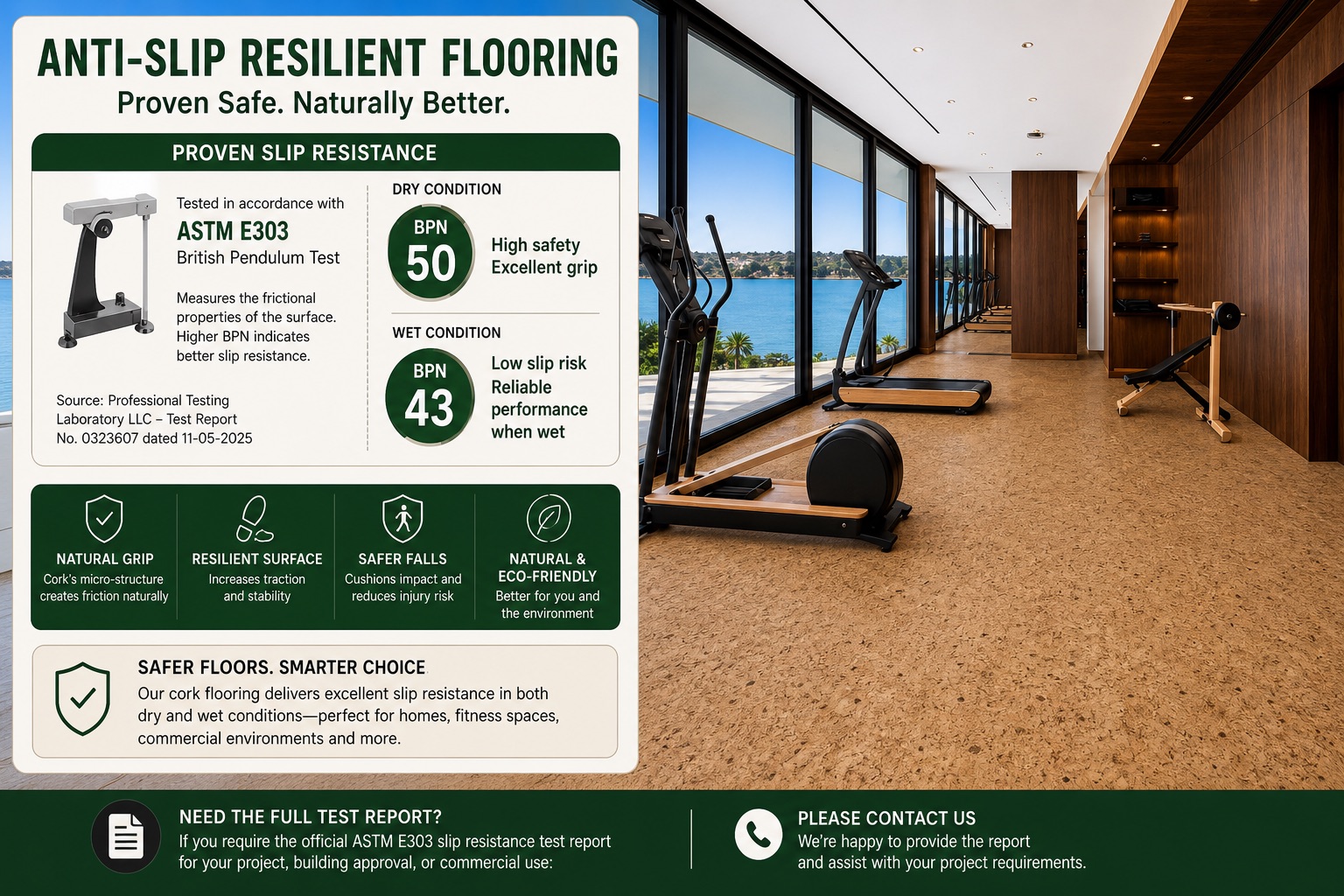
Our cork flooring was tested using the ASTM E303 British Pendulum Test, one of the most trusted methods for measuring surface friction.
???? Source:
Test Results:
- Dry Condition: BPN 50
- Wet Condition: BPN 43
What this means:
- ✔️ Excellent grip when dry
- ???? Reliable, safe performance when wet
- ❗ Maintains traction better than many hard surfaces
???? Understanding Slip Ratings (Simple)
| BPN Value | Slip Risk |
|---|---|
| 0–24 | High risk (dangerous) |
| 25–35 | Moderate |
| 36–45 | Low risk |
| 45+ | High safety / strong grip |
???? Cork scores:
- 50 (Dry) → High safety
- 43 (Wet) → Low slip risk

⚖️ Cork vs Other Flooring Types
Here’s how cork compares to common alternatives:
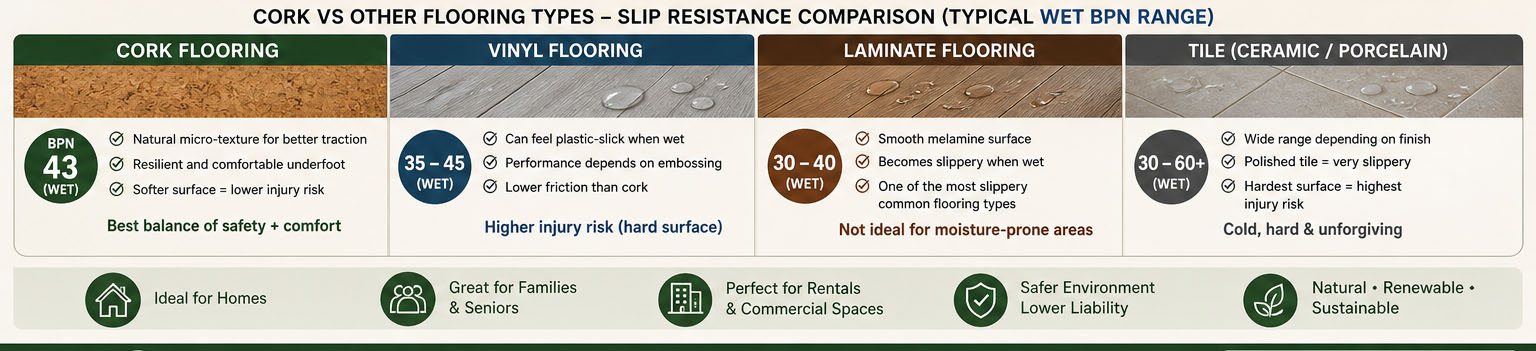
???? Cork Flooring (Your Product)
- Dry: BPN 50 ✔️
- Wet: BPN 43 ????
- Natural micro-texture + elasticity = better traction
- Softer surface reduces injury risk if someone falls
???? Best balance of safety + comfort
???? Vinyl Flooring (LVP / SPC / WPC)
- Typical wet BPN: 35–45
- Can feel plastic-slick, especially with water or dust
- Heavily dependent on surface embossing
⚠️ Issue:
- Lower friction when wet compared to cork
- Hard surface = higher injury risk
???? Laminate Flooring
- Typical wet BPN: 30–40
- Surface is melamine-coated (smooth)
- Becomes slippery when wet
⚠️ Issue:
- One of the most slippery common flooring types
- Not recommended for moisture-prone areas
⬜ Tile (Ceramic / Porcelain)
- Wide range: 30–60+
- Polished tile = extremely slippery
- Textured tile = good grip but hard surface
⚠️ Issue:
- Hardest surface → highest injury risk
- Cold + unforgiving
???? Why Cork Wins for Safety
1. Natural Grip
Cork has a microscopic cellular structure that creates friction naturally — not just a surface coating.
2. Resilient Surface
Unlike tile or laminate, cork compresses slightly underfoot, increasing traction.
3. Safer Falls
If a fall does happen:
- Cork absorbs impact
- Reduces injury compared to hard surfaces
???? This is a huge advantage for:
- Seniors
- Kids
- Rental properties
- Commercial spaces
???? Real-World Performance (Wet Conditions)
Your tested result:
- BPN 43 (wet)
This puts cork:
- ✔️ Above laminate
- ✔️ Competitive or better than most vinyl
- ✔️ Safer than polished tile
???? And with proper finish (like Loba 2K Supra AT), performance can be further improved.
???? Where Cork Flooring Excels
✔ Living rooms
✔ Bedrooms
✔ Offices
✔ Retail stores
✔ Condos & apartments
⚠️ With proper finish, also suitable for:
- Kitchens
- Entryways
???? Important Note (Build Trust)
No flooring is completely “non-slip.”
But cork provides:
- Consistent traction
- Better safety margin
- Reduced injury risk
???? That’s what truly matters.
???? Final Verdict
| Flooring Type | Slip Resistance | Safety |
|---|---|---|
| Cork | ⭐⭐⭐⭐☆ | ⭐⭐⭐⭐⭐ |
| Vinyl | ⭐⭐⭐☆ | ⭐⭐⭐ |
| Laminate | ⭐⭐☆ | ⭐⭐ |
| Tile | ⭐⭐⭐–⭐⭐⭐⭐ | ⭐⭐–⭐⭐⭐ |
???? Why Customers Choose Cork
- Safer underfoot
- Warmer and quieter
- Natural and eco-friendly
- Proven performance with real test data
???? Need the Full Test Report?
If you require the official ASTM E303 slip resistance test report for your project, building approval, or commercial use:
???? Please contact us — we’re happy to provide the report and assist with your project requirements.
???? Get Started
Order samples to compare the cork’s texture, finish and feel.
 Flooring
 Wall & Ceiling Tiles
 Cork Underlayment
 Supplies & Guides