 Ships USA-wide

Moisture flooring answer
Water-resistant cork flooring planning
Water-resistant cork flooring decisions need honest moisture planning. Product construction, seams, substrate moisture, finish protection, spill cleanup, and installation method matter more than a single waterproof claim.
- Do not use cork flooring as a shortcut for active leaks or damp slabs.
- Compare glue-down cork when edges, finish, and bonded installation matter.
- Ask a specialist before ordering for bathrooms, laundry rooms, basements, or frequent spill areas.
Water-Resistant Cork Flooring
Exploring the Water Resistance of Cork Flooring
Cork flooring has gained popularity for its unique properties, and one question that often arises is whether it is water resistant. In short, cork flooring is indeed water resistant, thanks to its natural composition and the presence of Suberin, a substance found in cork cells.
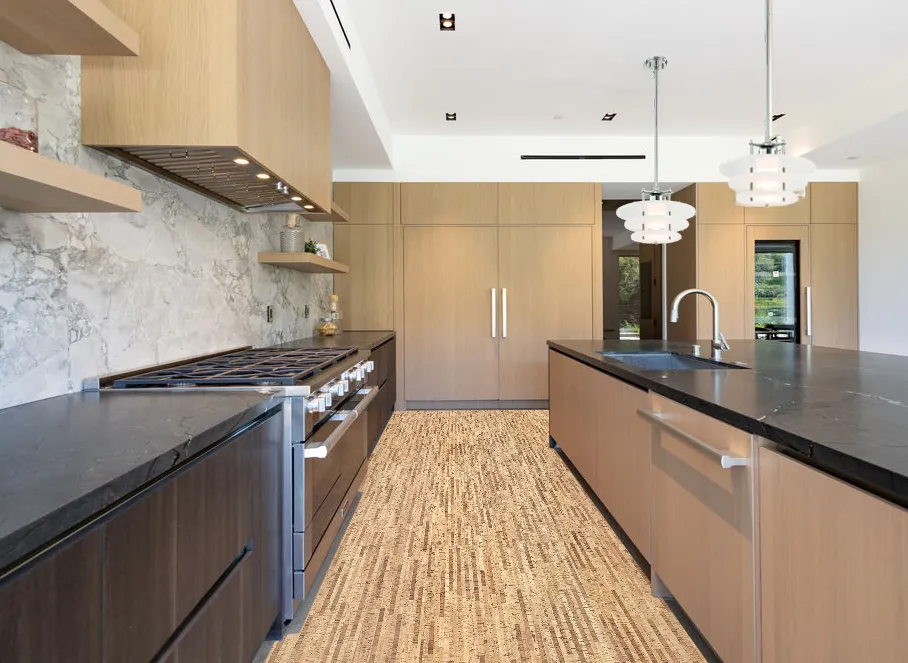
The water resistance of cork can be compared to the way wine bottles are sealed, preventing any liquid from seeping through. Surface spills and splashes have no detrimental effect on cork flooring. Its ability to withstand water makes it a suitable option for various settings, ranging from bustling households with active children to public spaces like schools and hotels. Moreover, cork flooring absorbs sound, making it a great choice for music rooms.
Kitchens, in particular, benefit from the unique properties of cork flooring. The cellular structure of cork allows it to absorb shocks, providing a comfortable surface for standing, even during long periods spent in the kitchen. Whether you prefer floating floors or glue-down tiles, there is a wide range of options available to suit your needs.
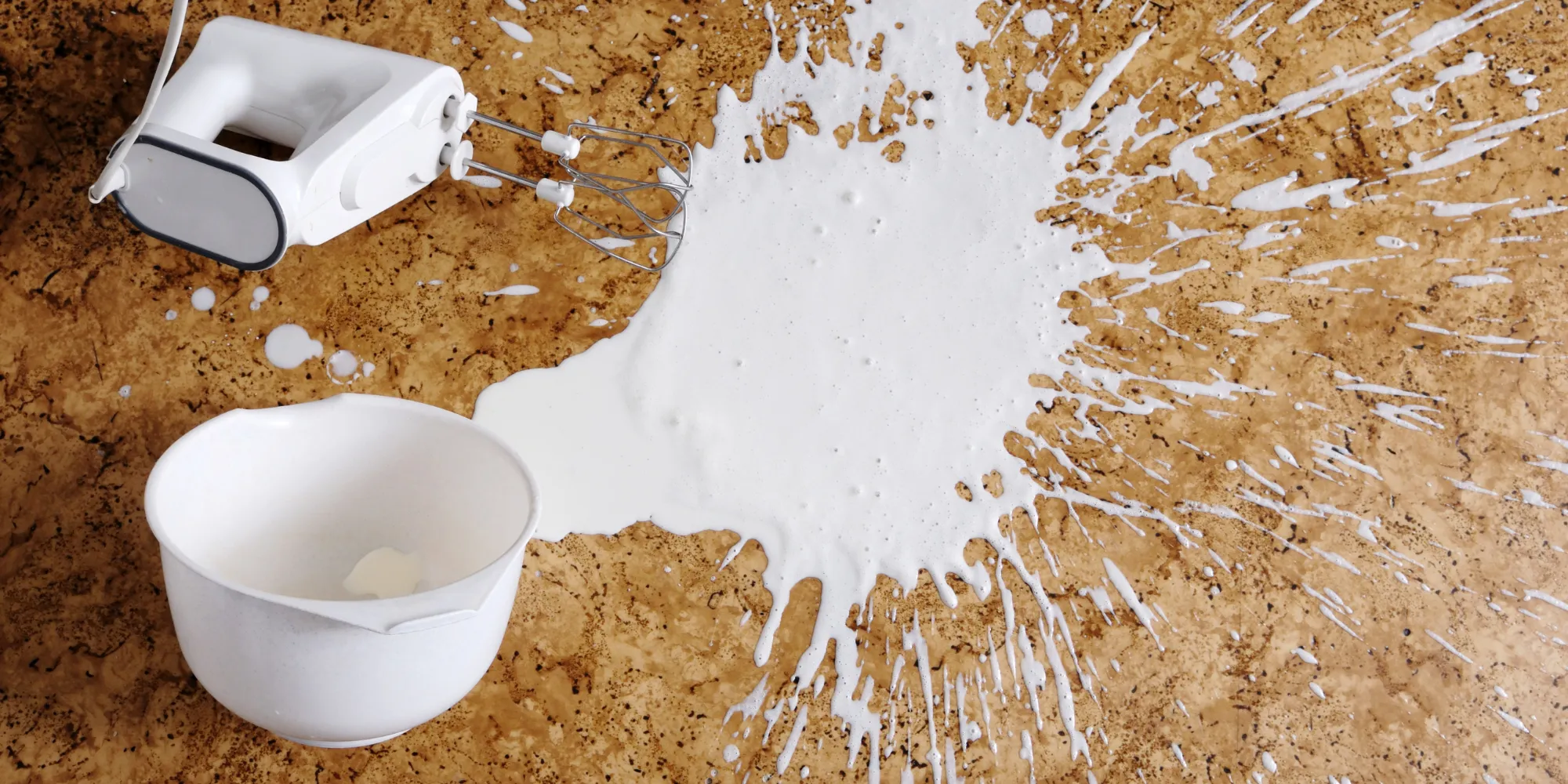
A properly sealed cork floating floor can handle substantial amounts of water on its surface for extended periods. With two coats of finish, significant spills should not cause any damage. However, extreme plumbing incidents, such as a dishwasher explosion, may surpass the capabilities of cork flooring, even when using glue-down tiles. In such cases, the underlying plywood subfloor would require replacement, necessitating the installation of a new cork floor.
Cork floating floors, treated with two layers of Loba AT finish, exhibit high resistance to water and can withstand prolonged exposure to spills. While major water events may pose a risk to the flooring, such occurrences are rare. The most common concern is surface spills, which can be easily addressed.
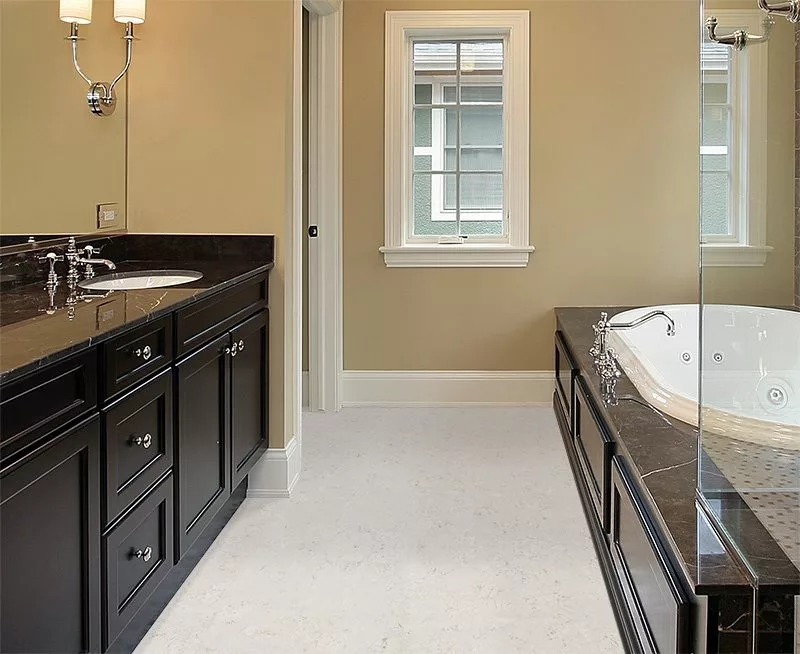
For those seeking extra assurance, our glue-down cork tiles are specifically designed for full bathrooms and can handle the additional moisture commonly found in such environments. It’s important to note, however, that like any flooring material, including porcelain or sheet vinyl, if water reaches the subfloor (the plywood to which the cork is glued), damage may occur.
In conclusion, cork flooring offers impressive water resistance due to its natural properties. Surface spills are easily handled, and properly sealed cork floors can withstand substantial amounts of water. For areas with increased moisture, such as bathrooms, specialized glue-down cork tiles are available. Understanding the limitations and ensuring proper installation and maintenance will help you enjoy the benefits of water-resistant cork flooring in your home or commercial space.
Plan water-resistant flooring carefully
Water-resistant flooring is not a shortcut for active moisture. Confirm product claims, substrate moisture, seams, finish, spill cleanup, and room use before ordering.
Check water resistance and room suitability
Check the product rating, seams, finish and subfloor moisture requirements for your room.
Frequently asked questions
Is cork flooring water-resistant?
Some cork floors can be water-resistant when the correct product, installation method, finish, maintenance, and room conditions are used, but cork is not a fix for active moisture.
Is cork flooring waterproof?
Do not treat cork as a waterproof shortcut. Product claims, seams, substrate moisture, finish, spills, and room use must be reviewed before choosing flooring.
Is glue-down cork better for moisture-conscious rooms?
Glue-down cork is often worth comparing for bathrooms, laundry rooms, entries, and other moisture-conscious rooms because the installation can be planned around edges and finish protection.
Should I ask a specialist before choosing water-resistant flooring?
iCorkfloor recommends asking a specialist when leaks, damp slabs, frequent spills, pets, bathrooms, laundry rooms, or basement moisture are part of the project.
 Flooring
 Wall & Ceiling Tiles
 Cork Underlayment
 Supplies & Guides