 Ships USA-wide

Cork Flooring R-Value: Why Cork Floors Feel Warmer, Quieter, and More Comfortable
When comparing flooring options, many homeowners focus on appearance, durability, or waterproof performance. However, one of the most overlooked advantages of cork flooring is its excellent thermal insulation value — commonly referred to as R-value.
Cork flooring naturally feels warmer, softer, and more comfortable than vinyl, laminate, tile, or stone flooring. This is because cork is a natural insulator that also helps reduce sound and vibration.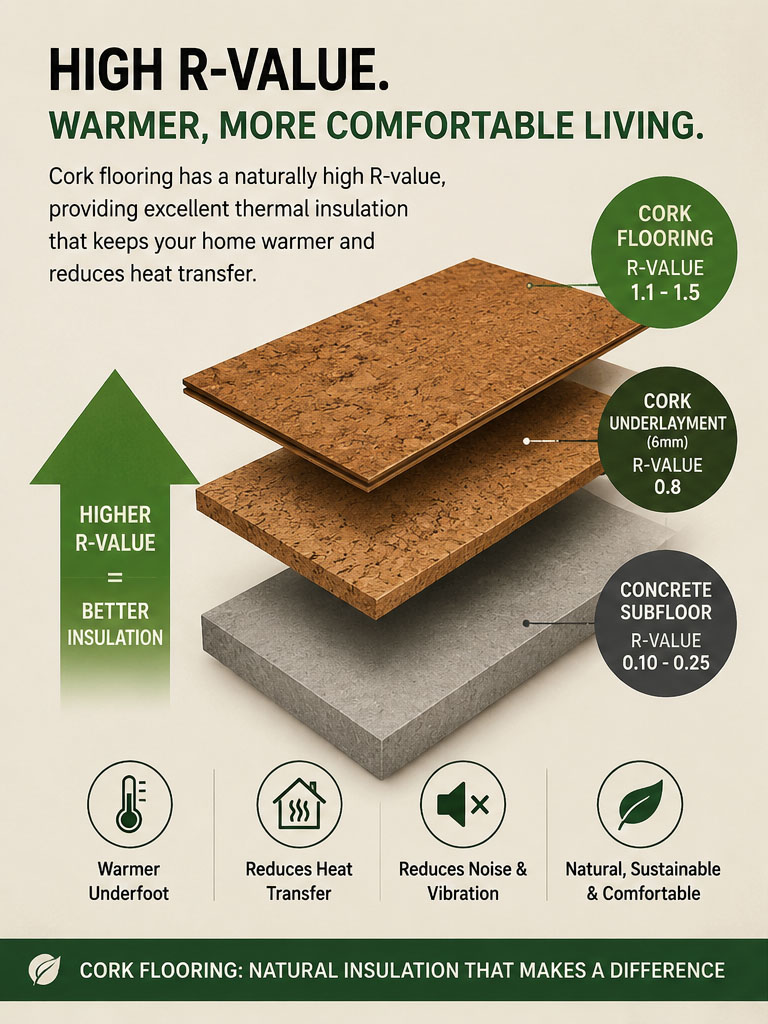
What Is R-Value?
R-value measures a material’s resistance to heat transfer.
The higher the R-value:
- The better the insulation
- The less heat escapes
- The warmer the floor feels underfoot
Materials with low R-values transfer heat quickly and often feel cold. Materials with higher R-values slow heat transfer and maintain a more comfortable surface temperature.
Why Cork Has Excellent Insulation Properties
Cork is harvested from the bark of the cork oak tree and is made up of millions of microscopic air-filled cells.
These natural air pockets create:
- Thermal insulation
- Sound insulation
- Vibration reduction
- Shock absorption
- Walking comfort
Unlike tile or vinyl, cork does not rapidly absorb body heat from your feet. This is why cork flooring feels naturally warm and comfortable year-round.
Cork Flooring R-Value Comparison
| Flooring Material | Approximate R-Value |
|---|---|
| Ceramic Tile | ~0.25 |
| Vinyl Flooring | ~0.20–0.30 |
| Laminate Flooring | ~0.50 |
| Hardwood Flooring | ~0.70 |
| Cork Flooring (10–12mm) | ~1.1–1.5 |
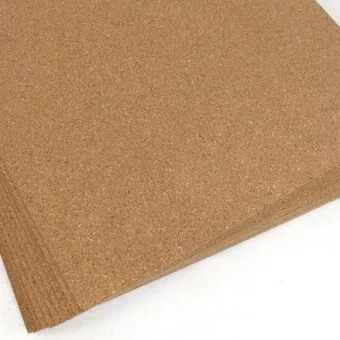
| Cork Underlayment 6mm | ~0.8 |
| Cork Underlayment 12mm | ~1.5–2.0 |
Cork flooring can provide several times the insulation value of tile or vinyl flooring.
Why Cork Feels Warmer Than Vinyl or Tile
Many customers compare cork flooring to luxury vinyl plank (LVP), laminate, or ceramic tile.
Even when two floors are technically the same room temperature:
- Tile feels cold because it transfers heat quickly
- Vinyl often feels cool due to low insulation
- Cork feels warm because it slows heat transfer
This difference is immediately noticeable when walking barefoot.
Cork Flooring Over Concrete
Concrete slabs are one of the biggest reasons homeowners experience cold floors.
Concrete transfers heat rapidly, especially in:
- Basements
- Condos
- Ground-level rooms
Cork flooring acts as a thermal barrier between the concrete and the living space, making rooms significantly more comfortable.
This is why cork flooring is extremely popular for:
- Basement renovations
- Bedrooms
- Family rooms
- Home offices
- Playrooms
Cork Reduces Vibration and Walking Noise
One of cork’s most unique advantages is its ability to absorb vibration.
Because cork is naturally resilient and flexible, it helps:
- Reduce footstep vibration
- Minimize echo and hollow sounds
- Absorb impact energy
- Reduce sound transfer between floors
- Create a quieter living environment
This vibration reduction is one reason cork flooring feels softer and more comfortable to walk on compared to rigid flooring materials like vinyl, laminate, or tile.
Many customers also notice:
- Less fatigue when standing
- Reduced strain on knees and joints
- A quieter and calmer room environment
Energy Efficiency Benefits
While flooring alone will not replace home insulation, cork flooring can help:
- Reduce cold transfer through floors
- Improve floor surface comfort
- Help rooms retain warmth more efficiently
Many homeowners find that cork flooring contributes to a more comfortable indoor environment during winter months.
Cork Flooring and Radiant Heating
Cork flooring is also compatible with many radiant heating systems when manufacturer guidelines are followed.
One major advantage of cork:
- It creates a more balanced surface temperature
- It avoids the harsh hot-and-cold feeling common with tile
Most quality cork floating floors are approved for radiant heating systems provided the surface temperature remains within manufacturer recommendations, commonly around 29°C (84°F).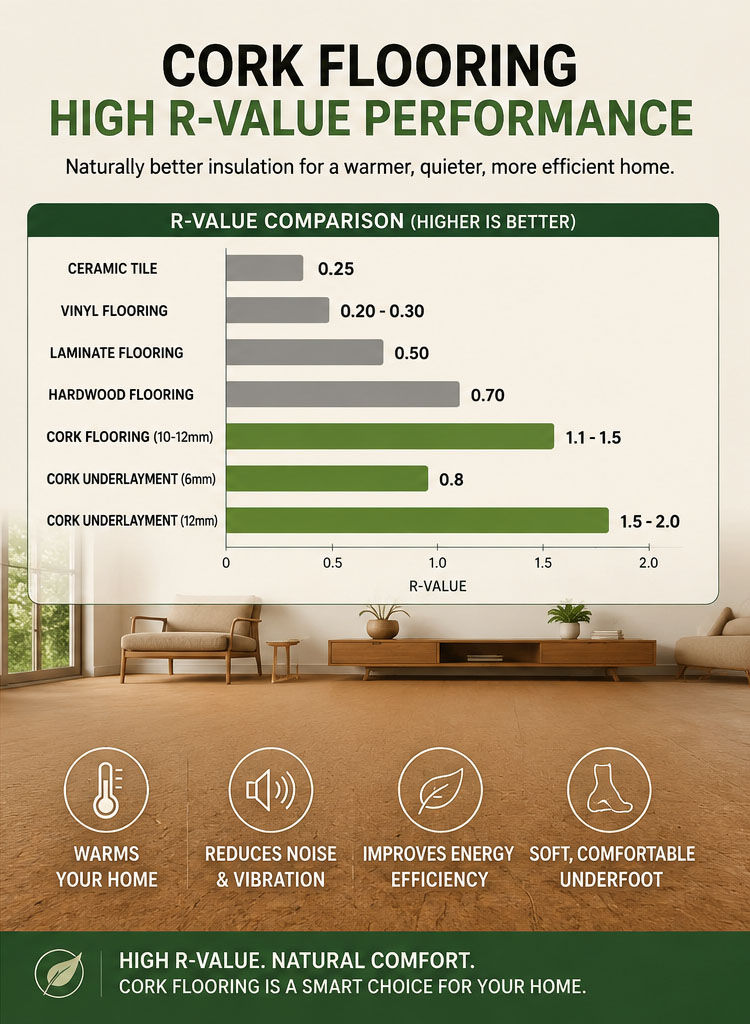
Sound Insulation + Thermal Comfort + Vibration Reduction
One of cork’s unique advantages is that it combines:
- Thermal insulation
- Acoustic insulation
- Vibration reduction
- Soft walking comfort
- Natural resilience
This makes cork ideal for:
- Apartments
- Condos
- Multi-level homes
- Quiet living spaces
Cork flooring not only feels warmer — it also helps reduce noise and vibration throughout the home.
Best Cork Flooring Setup for Maximum Warmth
For homeowners looking for the best thermal performance, a common recommendation is:
- 10mm–12mm cork floating flooring
- Combined with cork underlayment
This combination increases:
- Insulation value
- Sound reduction
- Vibration absorption
- Walking comfort
Why Homeowners Choose Cork Flooring
Customers often choose cork flooring because it offers:
- A warmer floor surface
- Better comfort underfoot
- Reduced vibration and noise
- Reduced fatigue when standing
- Quieter living spaces
- Natural insulation benefits
Unlike hard, cold flooring materials, cork creates a living environment that feels softer, quieter, warmer, and more comfortable every day.
Compare cork flooring by comfort, thermal properties, acoustic test data, construction and installation requirements.
 Flooring
 Wall & Ceiling Tiles
 Cork Underlayment
 Supplies & Guides