 Ships USA-wide

Materials and emissions
Cork flooring materials and emissions
Review the selected flooring’s construction, emissions reports, adhesive and finish requirements, ventilation and care instructions before ordering.
- Compare cork samples for texture, finish, color, thickness, and room lighting.
- Review adhesive, finish, and cleaning-product requirements before installation.
- Use cork when natural material, quiet rooms, warmth, and comfort are priorities.
Cork flooring materials and emissions
Why cork is better for allergy sufferers
For indoor air concerns, compare product-specific emissions reports, adhesives, finishes and cleaning requirements. Cork flooring does not prevent mould or allergic reactions.
Don’t mistake, cork is wood. Only a species far different to other hardwoods. The outstanding properties of cork are derived naturally from the structure and chemical composition of the inner cells. For example, each cubic centimeter of cork’s honeycomb-like structure contains between 30 and 40 million cells! These cells trap a gases substance that allows cork to operate similar to memory foam. Cork compresses and depresses with pressure, and the air cells make it naturally spongy and soft underfoot. Whether used as a subfloor under hardwood or tile, or as a standalone floor, cork provides a comfortable surface in rooms where you’ll do a lot of standing, like the kitchen. As a bonus, dropped glasses or dishes are less likely to break than on hardwood or tile. This elasticity not only gives cork wood a softer surface but allows the cells to retain ambient warmth. The cellular quality of cork also provides sound insulation. It’s this unique cellular structure that gives cork its innate characteristics, and each of these cells contains suberin, a waxy substance that gives cork its resistance to insects, mold and mildew. Cork is also resistant to more than 38 species of insects including the termite, and to the development of microbes.

Quercus Suber (thus, suberin) is the botanical name for a slow growing, evergreen oak that grows fit and industriously throughout specific parts of the Western Mediterranean (mostly in Portugal), and only in these regions. Most trees will die if their bark is removed, because the bark helps to carry the sap that is essential to the life of the tree. The cork oak, however, has two layers of bark. The inner layer is alive and is the base on which a new inner layer grows each year. As the old layers move outward and die, they serve as insulation, protecting the tree from the hot arid winds in the growing areas. The dead outer layer can be stripped away without injuring the tree, but care must be taken not to penetrate the inner living bark. And it is with the outer bark that most cork products are derived. Cork trees are very carefully cared for – the older the tree, the more cork it produces. Some trees grow to be 170 years old. As eco-friendly design gains in popularity, Cork proves to be one of the most highly renewable resources. Not only is it good for the ecosystem at large, cork is great for a home’s environment as well for all the benefits it brings.
Want the best in a
Compare the selected flooring’s construction and emissions documentation. Follow its moisture limits and cleaning requirements; the material alone does not establish a germ-free or allergen-free home.
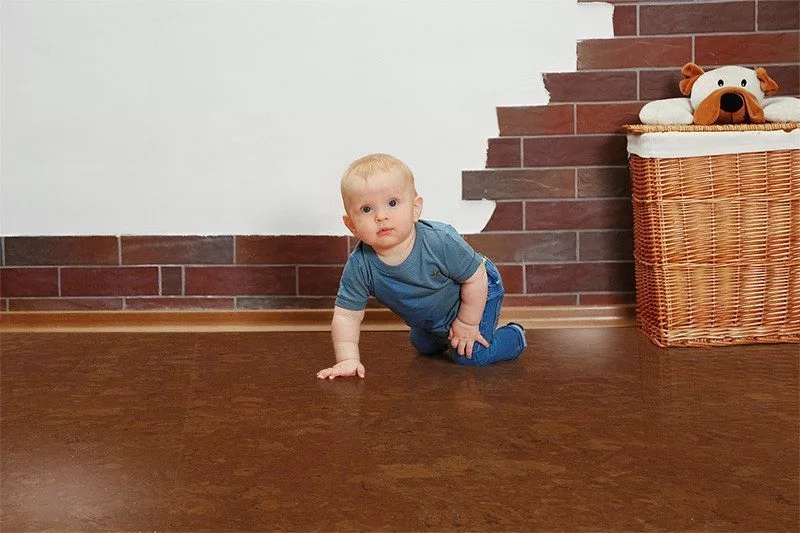
Compare cork flooring materials and emissions
Compare the complete flooring system: product construction, emissions reports, adhesive, finish, cleaning requirements and room ventilation.
Check flooring materials and emissions
Review product construction, emissions documents, adhesive and finish requirements for the complete installation.
Frequently asked questions
What should I check for cork flooring emissions?
Review the selected product’s emissions reports, adhesive and finish requirements, installation method and maintenance instructions.
What should I compare for indoor air concerns?
Compare product construction, adhesive, finish, room ventilation, maintenance products, samples, and installation instructions before choosing flooring for indoor air goals.
How can I compare cork with vinyl flooring?
Cork is a natural material that many buyers compare with vinyl, laminate, hardwood, and tile when comfort, sound control, renewable sourcing, and material preference matter.
What can I check with flooring samples?
iCorkfloor recommends samples so buyers can compare color, texture, finish, thickness, and room lighting before ordering full boxes.
 Flooring
 Wall & Ceiling Tiles
 Cork Underlayment
 Supplies & Guides