 Ships USA-wide

Cork Underlayment Installation
Underlayment installation answer
Cork underlayment installation
Cork underlayment installation starts with a clean, flat, dry substrate, then matching the 3mm, 6mm, or 12mm cork layer to the finished floor, sound goal, moisture limits, and approved installation method.
- Compare 3mm, 6mm, and 12mm cork underlayment before choosing the full project layer.
- Confirm the finished floor allows cork underlay under hardwood, laminate, vinyl, tile, or cork.
- Use samples and specialist help to confirm thickness, finished height, and acoustic expectations.
Why an Honest IIC 50–55 Is Already Excellent: The Truth About Flooring Sound Ratings
In today’s flooring market, soundproofing claims have become confusing and, in many cases, misleading.
Many condominium boards, strata councils, architects, and homeowners are told that flooring must achieve an IIC or STC rating of 70 or higher. As a result, many excellent flooring systems are rejected—not because they perform poorly in real life, but because the published numbers do not appear high enough.
The reality is that many of the highest advertised sound ratings are based on unrealistic laboratory conditions and do not reflect what actually happens in a real condo or home.
An honestly tested flooring system that achieves a final IIC of 50–55 is already considered very good to excellent in the building industry.
The Problem With “IIC 70+” Claims
Many flooring manufacturers advertise “IIC 70+” or “STC 70+.”
These numbers sound impressive, but they are often achieved only when the flooring is tested under ideal laboratory conditions using:
• Thick 8–10 inch concrete slabs
• Suspended acoustic ceilings below
• Acoustic insulation in the ceiling cavity
• Large air spaces
• Perfect laboratory conditions
When all of these layers are combined, the entire building assembly may test above IIC 70.
However, the flooring itself may only contribute a very small portion of that result.
The problem is that many companies then market the final number as though the underlay or flooring alone created the entire sound reduction.
In reality, thin foam underlays often contribute only 3–10 points of real improvement.
Why So Many Buildings Still Have Noise Complaints
This explains why so many condominium buildings install large amounts of flooring with thin foam underlay, yet strata councils continue to receive complaints about noise from upstairs neighbours.
The flooring may have been approved because it claimed “IIC 70+,” but the number did not truly represent the sound reduction of the flooring itself.
The result is disappointing real-world performance.
Many residents still hear:
• Footsteps
• Chairs moving
• Children running
• Dropped objects
• Noise transferring into neighbouring units
The problem is not that the floor failed to meet the advertised number.
The problem is that the advertised number was never an honest representation of the flooring system in the first place.
The Difference Between IIC and Delta IIC
The most important sound rating for flooring is not IIC or STC.
It is Delta IIC.
Delta IIC measures only the improvement created by the flooring and underlay themselves.
Unlike overall IIC ratings, Delta IIC cannot be artificially inflated by thick concrete, suspended ceilings, or insulation.
The Delta IIC test includes only:
1. A standard 6-inch concrete slab
2. The underlay
3. The flooring above it
The sound value of the concrete slab is then removed mathematically.
The remaining number belongs only to the flooring and underlay.
This makes Delta IIC the most honest and meaningful way to compare different products.
What Is Considered a Good Delta IIC?
Delta IIC Improvement Real-World Meaning
3–10 dB Minimal improvement
10–14 dB Fair
14 dB Good acoustic floor
20 dB Excellent acoustic floor
22+ dB Exceptional
In the flooring industry, a Delta IIC of 14 is generally considered good.
A true Delta IIC of 20 is considered excellent.
Our 6 mm cork underlay combined with 11 mm floating cork flooring achieves approximately 20 dB of sound reduction.
That is significantly better than most thin foam underlays, even when the foam products advertise a much higher final IIC number.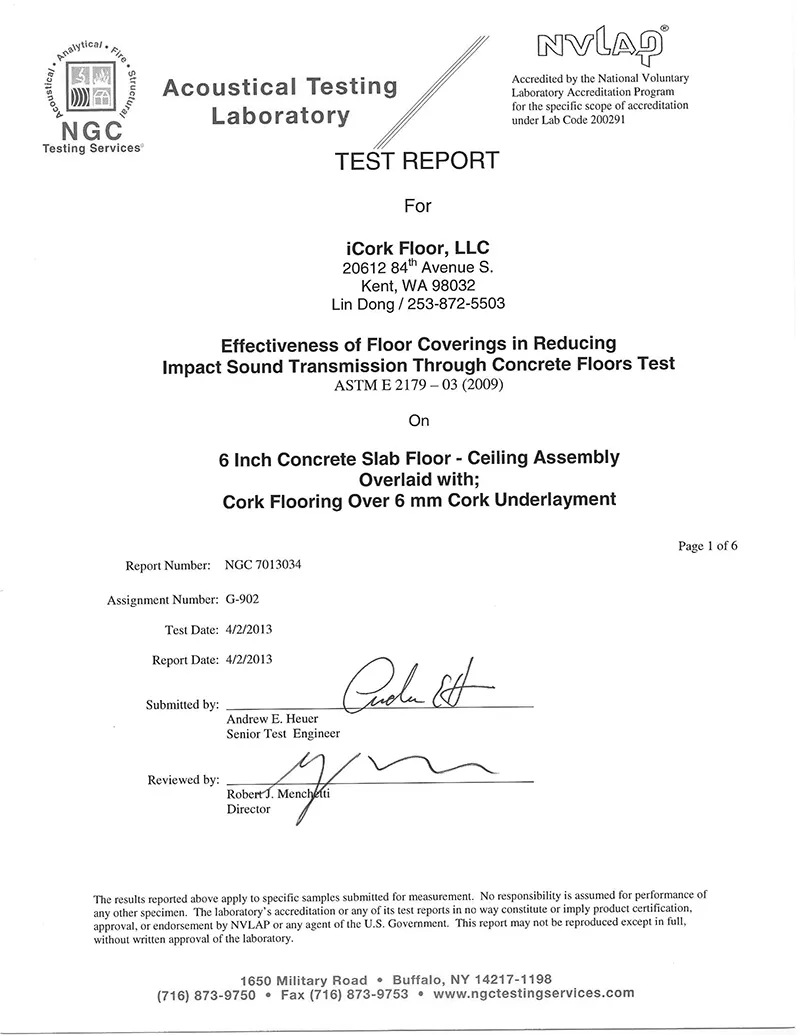
Understanding Final IIC Numbers
The Delta IIC number is then added to the building’s own sound rating.
For example:
• A 6-inch concrete slab by itself may have an IIC of approximately 27.
• An 8-inch concrete slab may have an IIC around 36.
• A typical wood-framed floor with lightweight concrete (“gypcrete”) may have an IIC around 30–35.
If the flooring system adds a Delta IIC of 20:
• 6-inch concrete slab: 27 + 20 = approximately IIC 47
• 8-inch concrete slab: 36 + 20 = approximately IIC 56
• Wood frame + gypcrete: 35 + 20 = approximately IIC 55
An honestly tested final IIC of 50–55 is already considered a very good and comfortable floor system.
Final IIC Rating Real-World Performance
Below 40 Poor – footsteps and impact noise are clearly heard
40–45 Fair
45–50 Good
50–55 Very Good – quiet and comfortable
55–60 Excellent
Above 60 Exceptional
Above 70 Rare and usually achievable only in special laboratory conditions
Most building codes and condominium standards consider IIC 50 to be the minimum acceptable target.
Therefore, a flooring system honestly achieving IIC 50–55 should be considered successful.
Why Cork Performs Better Than the Numbers Suggest
When it comes to sound insulation, cork ranks #2 in the world.
It is second only to solid rubber.
It is important not to confuse solid rubber with “foam rubber.”
Compare underlayment by material, thickness, compatibility and the acoustic test report for the complete assembly.
They may create an impressive marketing number in a laboratory, but they provide much less real-world sound reduction and often lose performance over time as the foam compresses.
Cork is very different.
Cork has a natural cellular structure made of millions of tiny sealed air pockets. These cells absorb vibration, reduce impact noise, and provide thermal insulation.
Because of this, cork flooring and cork underlay consistently provide some of the best combined sound and thermal performance in the industry.
For example:
• 6 mm cork underlayment performs similarly to approximately 4 mm of solid rubber underlayment.
• Equivalent solid rubber underlayment often costs $5–12 per square foot.
• 6 mm cork underlay also provides roughly the same thermal insulation as 1 inch of solid Styrofoam insulation.
When 6 mm cork underlay is combined with 11 mm cork floating flooring, the system provides approximately 20 dB of sound reduction.
To put that into perspective:
• An extra 14 dB is considered good.
• A true 20 dB improvement is considered excellent.
Why We Recommend Cork Instead of Foam Underlay
Many laminate floors installed over thin foam underlay can actually make a room louder.
Some laminate systems have tested at negative values, such as -6 dB. This means the floor increases noise instead of reducing it.
By comparison, cork:
• Reduces impact noise
• Reduces airborne noise
• Reduces echo inside the room
• Improves walking comfort
• Adds thermal insulation
• Maintains performance over time
• Does not compress as quickly as foam
That is why we have so many happy customers after installing cork floating flooring together with cork underlay.
Even though the published number may appear lower than heavily marketed foam products, customers consistently tell us that their homes are quieter, more comfortable, and that complaints from neighbours are reduced or eliminated.
What Strata Councils Should Require
Instead of requiring “IIC 70+,” strata councils and HOA boards should require:
• A tested Delta IIC number
• The actual floor structure used during testing
• The expected final IIC when installed in the real building
A fair requirement would be:
• Delta IIC 14 minimum = acceptable
• Delta IIC 20 or greater = excellent
This is a much more realistic and honest standard than requiring an arbitrary “IIC 70+” that may be impossible to achieve in the actual building.
Conclusion
The flooring industry has created confusion by promoting unrealistic sound ratings.
Large advertised IIC numbers do not necessarily mean better soundproofing.
Only Delta IIC reveals the true acoustic contribution of the flooring and underlay.
When products are compared honestly, cork consistently ranks among the best-performing materials available.
An honestly tested floor assembly that reaches IIC 50–55 is already a very good result.
In many cases, it performs better in real life than heavily marketed products claiming “IIC 70+.”
The goal should not be chasing the biggest number.
The goal should be understanding what the number truly means.
We have two independent acoustic test reports available:
- 11mm cork floating flooring installed over 6mm cork underlayment
- 12mm cork underlayment system
Please contact us to request copies of these testing reports
Download the Approval Kit
Need HOA sign-off for your new floor? The HOA Flooring Approval Kit is the download hub: per-thickness acoustic test statements, the ΔIIC +20 assembly test summary, indoor-air-quality certificates, and a fill-in cover letter your board can file.
Plan cork underlayment before installation
Underlayment research should turn into a product choice only after thickness, floor type, subfloor, moisture, finished height, and acoustic goals are clear.
Check underlayment requirements
Confirm floor compatibility, subfloor condition and height limits before selecting cork underlayment.
Frequently asked questions
How do you install cork underlayment?
Install cork underlayment over a clean, flat, dry substrate using the method approved for the finished floor. Confirm moisture limits, seams, adhesive or floating-floor instructions, and finished height before work starts.
What cork underlayment thickness should I use?
Choose 3mm for low-profile projects, 6mm for balanced acoustic support, and 12mm or half-inch cork when higher impact sound control or thermal support is the priority.
Can cork underlayment go under hardwood, laminate, vinyl, tile, and cork?
Often yes, when the finished floor manufacturer allows an underlay layer and the substrate, moisture conditions, adhesive requirements, and finished height are confirmed first.
Should I order cork underlayment samples before installing?
iCorkfloor recommends samples so buyers can compare cork thickness, density, finished height, feel, and project fit before ordering full underlayment boxes.
 Flooring
 Wall & Ceiling Tiles
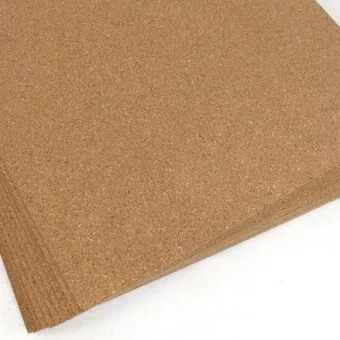 Cork Underlayment
 Supplies & Guides