 Ships USA-wide

Fitness flooring answer
Yoga and gym flooring with cork
Cork can be useful for yoga and gym flooring when a room needs warmer comfort, softer steps, quieter impact, natural material, and a surface plan matched to traffic and finish protection.
- Compare glue-down cork tiles for gyms, studios, therapy rooms, and fitness spaces.
- Use samples to check texture, traction feel, color, thickness, and underfoot comfort.
- Plan finish protection and equipment loads before ordering full boxes.
Cork Gym and Yoga Flooring

Cork has come a long way from being a wine stopper. The construction industry has made it a welcome product in residential and commercial buildings. In fact, the cork flooring that is available today comes in a wide range of colors and designs. But did you know that cork flooring has been a popular addition as gym flooring and physical therapy centers floor for many years now? Why you ask?
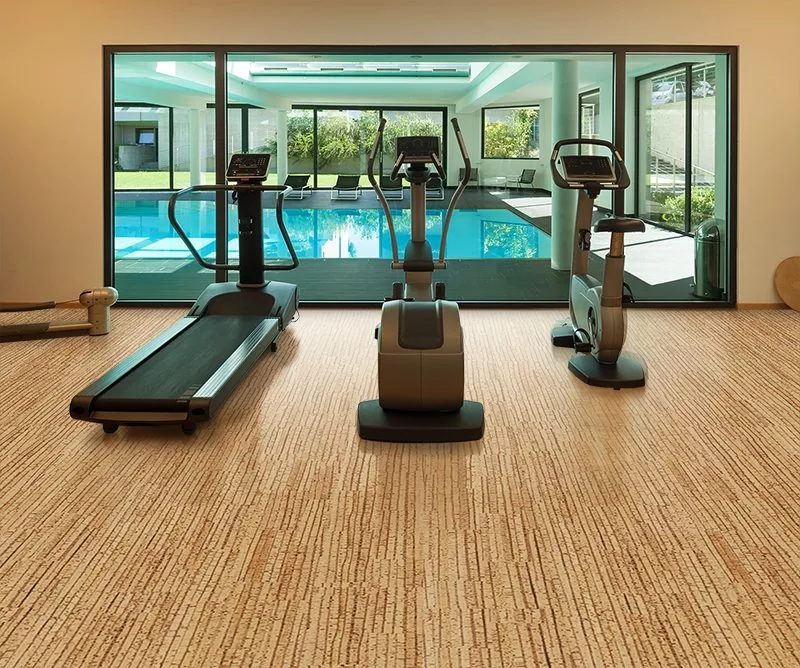
The answer is actually very simple. Because it is the best product for what it does.
Cork has a cellular structure much like a honeycomb with millions of pockets or chambers. Each of the cells is filled with air. When you walk on this type of a surface, the air becomes compressed and released. This process absorbs the shock and provides a cushioning effect, making it highly comfortable to walk on.
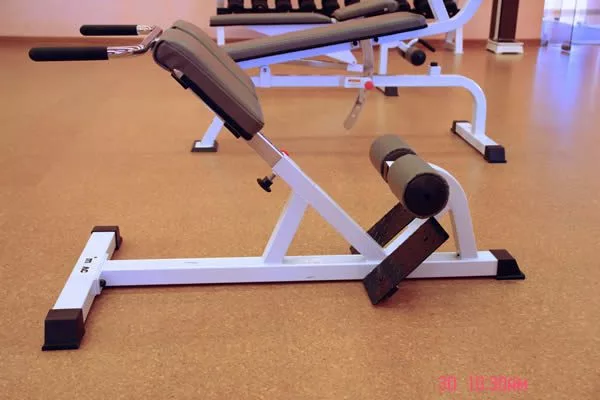
Cork is very durable and has been used in churches, libraries and several public buildings over the years. One of the longest known places is the Library of Congress. It is also easy to keep clean and to maintain. Protect the cork floor with a couple of layers of water-based polyurethane and you will simply keep a low-maintenance schedule of sweeping or vacuuming followed by mopping with a slightly damp mop. Every 3-7 years re-varnish with the polyurethane and you’ll keep your gym flooring looking like new.
The same air trapped cells that give cork floors that ‘cushion’ also helps reduce vibration and noise caused from walking or from falling objects. This quality makes it a preferred option for gym flooring and physical therapy centers floor.
Cork contains a natural substance called suberin. This substance is thick and waxy to touch. It repels insects such as termites. The suberin also acts as a protective shield against water so even if the cork remains wet for a long period of time, it will not mold or mildew as gym flooring .
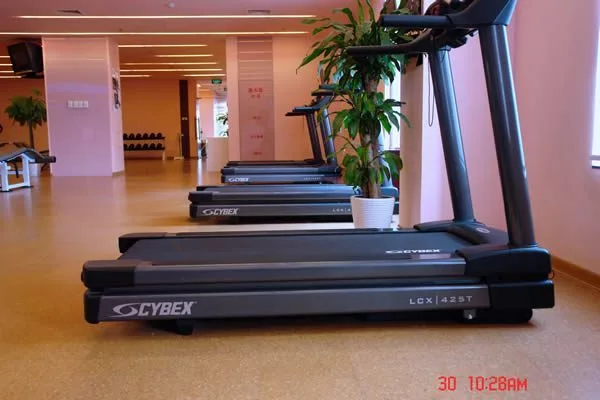
For a therapy or exercise room, check traffic rating, slip resistance, moisture limits and installation requirements. Cork provides a resilient surface, but the flooring does not establish protection from joint injuries or allergy relief.
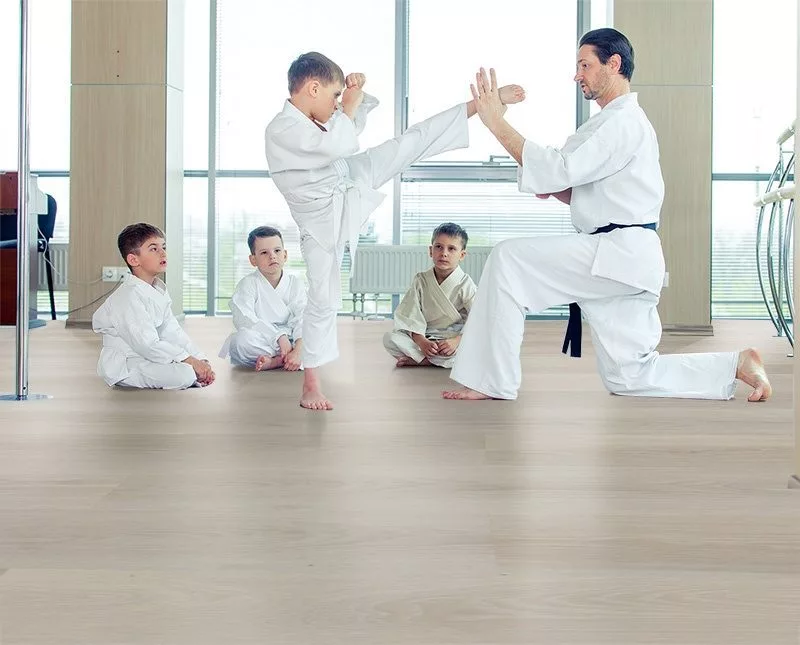
And then add to that the fact that cork is a sustainable resource. Only the bark is harvested to manufacture cork for gym flooring, walls and other purposes. The tree is left to regenerate and can be harvested again in nearly a decades time.
And now you know. Don’t you agree that cork is the best at what it does?
Choose cork for yoga, gym, and fitness rooms
Fitness flooring buyers should compare comfort, traction feel, traffic, equipment loads, impact sound, finish protection, samples, and whether cork flooring, cork underlayment, or both fit the room.
Choose flooring for a gym or studio
Check equipment loads, finish protection, impact sound and cleaning requirements for your gym or studio.
Frequently asked questions
Is cork good for yoga and gym flooring?
Cork can be a strong choice for yoga, fitness, therapy, and home gym rooms when resilient comfort, warmer feel, and quieter steps matter.
Should gyms use floating or glue-down cork?
Glue-down cork is often worth comparing for gyms and fitness rooms because bonded tiles can support layout control, finish protection, and heavy-use planning.
Should I order gym flooring samples first?
iCorkfloor recommends samples so buyers can compare texture, traction feel, thickness, color, and room lighting before ordering full boxes.
 Flooring
 Wall & Ceiling Tiles
 Cork Underlayment
 Supplies & Guides