 Ships USA-wide

Subfloor prep answer
Concrete moisture testing before cork flooring
Concrete moisture testing helps determine whether cork flooring, adhesive, underlayment, and finish choices fit the substrate. Moisture and mold concerns must be corrected before the flooring system is chosen.
- Confirm moisture readings against product and adhesive requirements.
- Do not use cork flooring to cover an unresolved leak, damp slab, or active mold issue.
- Compare installation paths only after the subfloor meets the finished floor requirements.
Concrete Moisture and Cork Flooring Prep
This well-documented bit of Intel is rarely known outside the flooring business. Homeowners need to know the dangers of purchasing rubber, rubberized or “latex backed” floor décor.
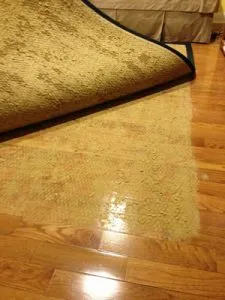
Rubber, whether man made or “natural latex”, is a common anti-slip additive to many forms of area rugs and mats. These rubber products contain “plasticizers” that leach into the floor causing discolouration. The floors are risk for this discolouration are the most common: hardwood, vinyl, linoleum (brand name: Marmoleum), epoxy coatings and cork.
Rubberized products leave behind dark yellow/orange stains that are often described as “tabacco” or “nicotine” stains. They are often permanent. Some hardwood floors (solid hardwood) can be repaired by performing a full sand and refinish, but this is an expensive lesson most people would prefer not to have to learn.
As consumers, we forget or are unaware of our floor’s performance concerns. To us, they are “floors” and should perform like stone or concrete without any concerns for decades. Sadly, this is not always the case (unless of course you have ceramic, porcelain or stone tiles). The common floor finishes require some form of pampering and forethought. The most common area of complaint is floor rugs.
Not all area rugs are created equal. Low-end, bargain priced floor rugs can be fun to own, but they carry a heavy price if they damage a floor. Consumers should look for the “Acceptable for Use with Hardwood” tag. This tag is seen in mid to high end flooring and décor stores. The tag indicates the rug has been produced without the use of “plasticizers” (aka. “rubber”).
To homeowners, we say “Know Thy Floor”. To retailers, “Tag your rugs”. As the owner or keeper of the floor, it is up to the consumer to look for the tag that indicates the area rug or mat is acceptable for use with hardwood. Without this tag, you run the risk of incurring expensive repairs or, in the case of vinyl, cork, linoleum and epoxy coated flooring, full replacement.
Solve moisture questions before choosing flooring
Moisture research should happen before checkout. Confirm the slab, substrate, adhesive, underlayment, finish, and room conditions before choosing cork flooring.
Protect cork floors before rug, moisture, or subfloor damage spreads
Find the source of moisture or damage before choosing repairs or replacement flooring.
Frequently asked questions
Why test concrete moisture before cork flooring?
Concrete moisture can affect adhesive, finish, underlayment, and floor performance. Test moisture and follow product limits before choosing a cork installation method.
Can cork flooring help with mold concerns?
Cork itself is not a fix for an active moisture or mold problem. The source of moisture must be corrected and the substrate must meet product requirements before installation.
What should I compare after a concrete moisture test?
Compare the test result with product instructions, adhesive requirements, underlayment options, finished height, room use, and whether floating or glue-down cork is appropriate.
 Flooring
 Wall & Ceiling Tiles
 Cork Underlayment
 Supplies & Guides